







































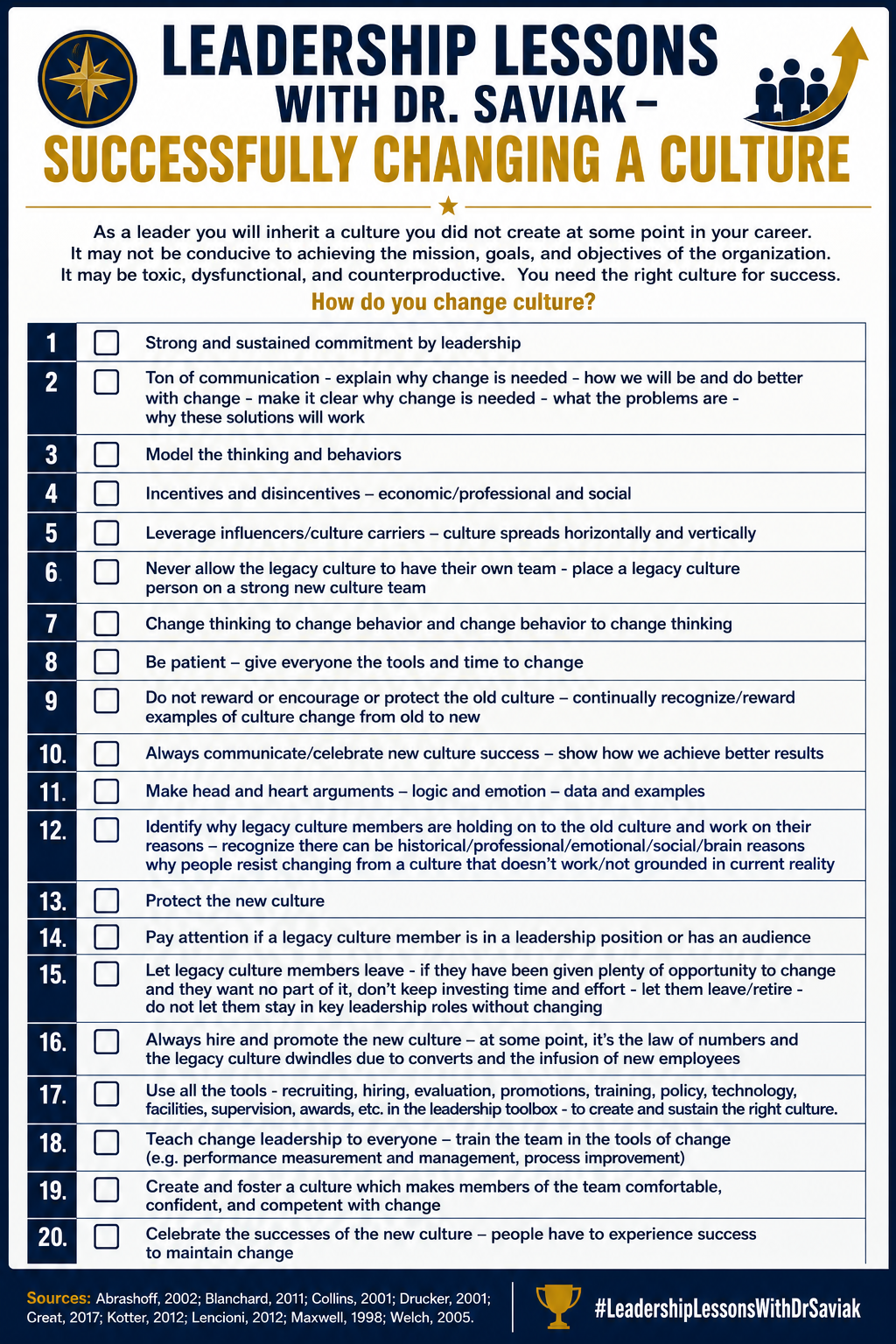
As a leader you will inherit a culture you did not create at some point in your career. It may not be conducive to achieving the mission, goals, and objectives of the organization. It may be toxic, dysfunctional, and counterproductive. You need the right culture for success. How do you change culture?
-
Strong and sustained commitment by leadership
-
Ton of communication – explain why change is needed – how we will be and do better with change – make it clear why change is needed – what the problems are – why these solutions will work
-
Model the thinking and behaviors
-
Incentives and disincentives –economic/professional and social
-
Leverage influencers/culture carriers – culture spreads horizontally and vertically
-
Never allow the legacy culture to have their own team -place a legacy culture person on a strong new culture team
-
Change thinking to change behavior and change behavior to change thinking
-
Be patient – give everyone the tools and time to change
-
Do not reward or encourage or protect the old culture – continually recognize/reward examples of culture change from old to new
-
Always communicate/celebrate new culture success – show how we achieve better results
-
Make head and heart arguments– logic and emotion – data and examples
-
Identify why legacy culture members are holding on to the old culture and work on their reasons – recognize there can be historical/professional/emotional/social/brain reasons why people resist changing from a culture that doesn’t work/not grounded in current reality
-
Protect the new culture
-
Pay attention if a legacy culture member is in a leadership position or has an audience
-
Let legacy culture members leave – if they have been given plenty of opportunity to change and they want no part of it, don’t keep investing time and effort – let them leave/retire – do not let them stay in key leadership roles without changing
-
Always hire and promote the new culture – at some point, it’s the law of numbers and the legacy culture dwindles due to converts and the infusion of new employees
-
Use all the tools – recruiting, hiring, evaluation, promotions, training, policy, technology, facilities, supervision, awards, etc. in the leadership toolbox – to create and sustain the right culture.
-
Teach change leadership to everyone – train the team in the tools of change (e.g. performance measurement and management, process improvement)
-
Create and foster a culture which makes members of the team comfortable, confident, and competent with change
-
Celebrate the successes of the new culture – people have to experience success to maintain change
DOWNLOAD THE CHECKLIST
Sources: Abrashoff, 2002; Blanchard, 2011; Collins, 2001; Drucker, 2001; Grant, 2017; Kotter, 2012; Lencioni, 2012; Maxwell, 1998; Welch, 2005.
#LeadershipLessonsWithDrSaviak