






































FLAGLER COUNTY, Fla. – When most people think about emergency management, they picture emergency operations centers, weather forecasts, and disaster response teams.
What many don’t see are the volunteers quietly helping make it all possible.
According to Flagler County Emergency Management Director Jonathan Lord, volunteers have become one of the department’s most valuable resources.
“We have an amazing team of volunteers that keeps growing every year,” Lord said. “Honestly, we couldn’t do our jobs without them.”
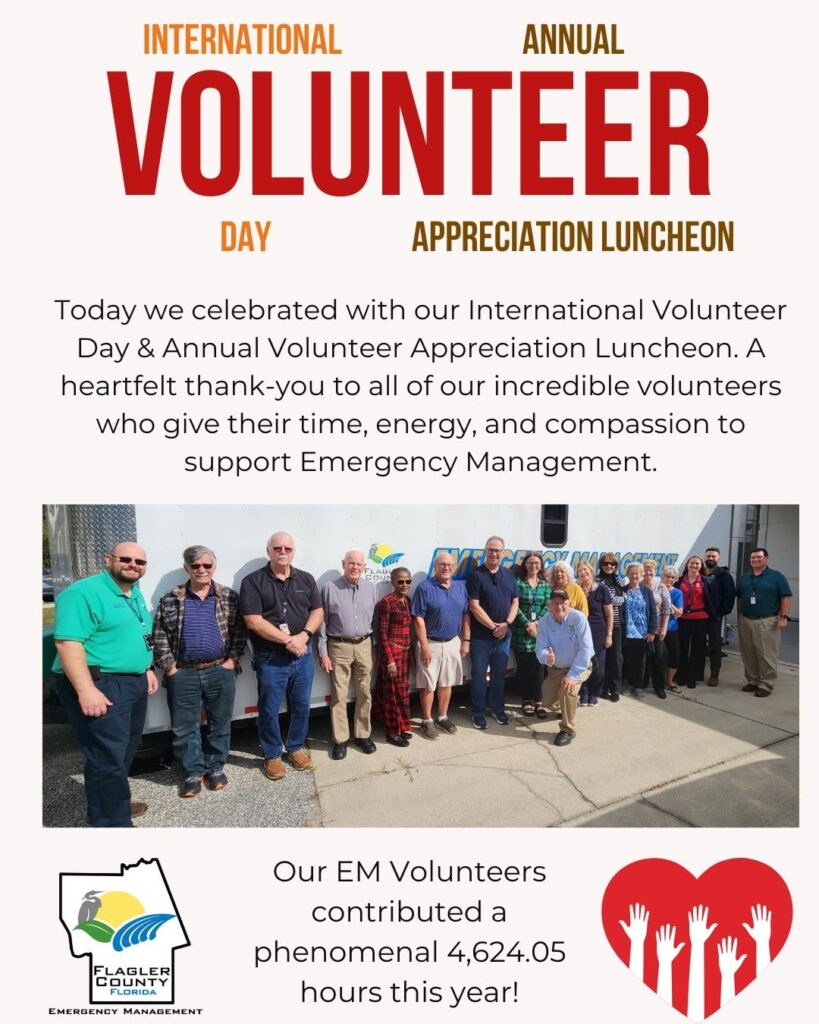
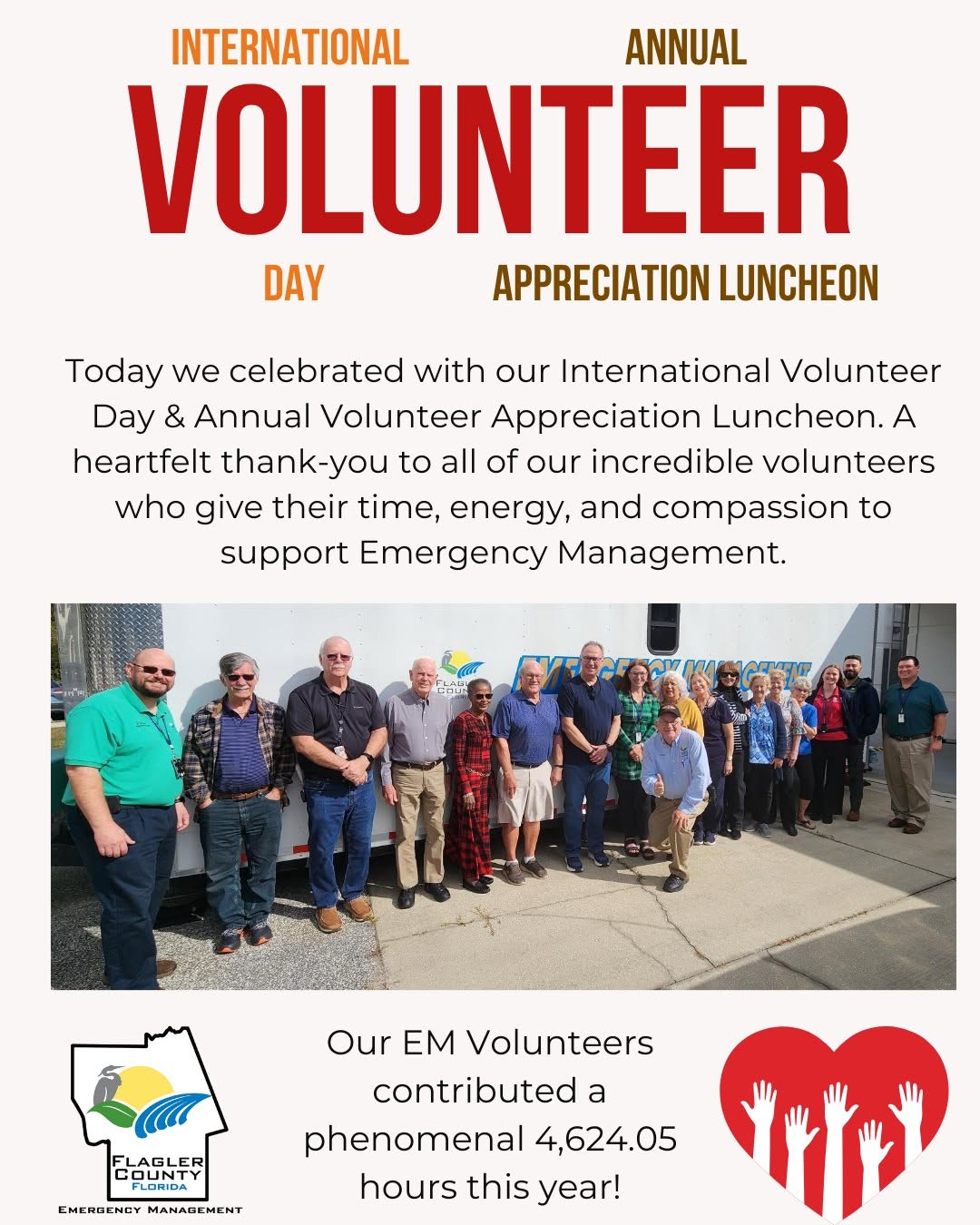
Today, Flagler County Emergency Management has approximately 30 active volunteers—the largest volunteer corps the department has ever had.
To remain active, volunteers contribute an average of four hours per week, though many donate significantly more time.
Their impact is substantial.
“They’ve provided well over $175,000 worth of services that otherwise would have had to have been funded,” Lord said.
Visitors to the Emergency Operations Center may not realize it, but the front desk is staffed entirely by volunteers.
“Our front desk is staffed five days a week, 100 percent by volunteers,” Lord noted.
The volunteers perform administrative duties, assist residents, support preparedness initiatives, and help the department maintain a visible presence throughout the community.
Their value becomes even greater during emergencies.