

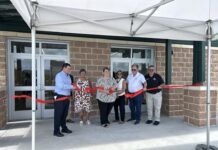

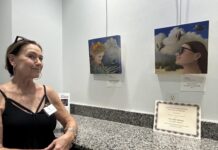
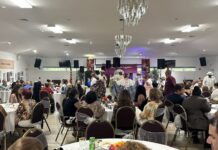
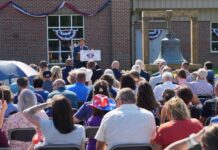



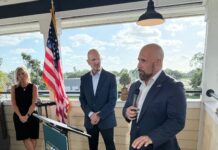
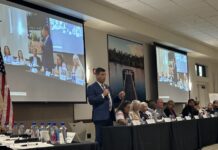
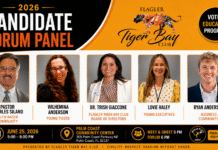





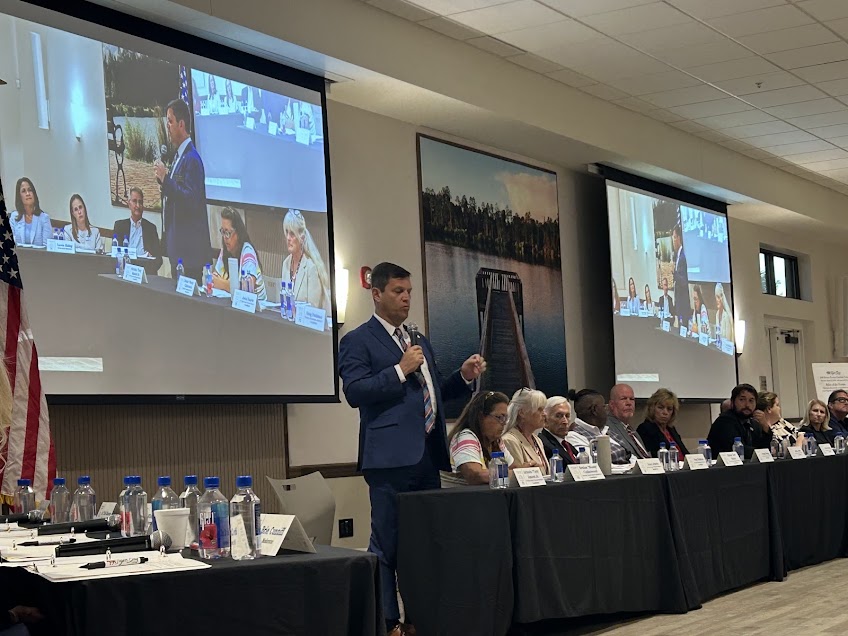
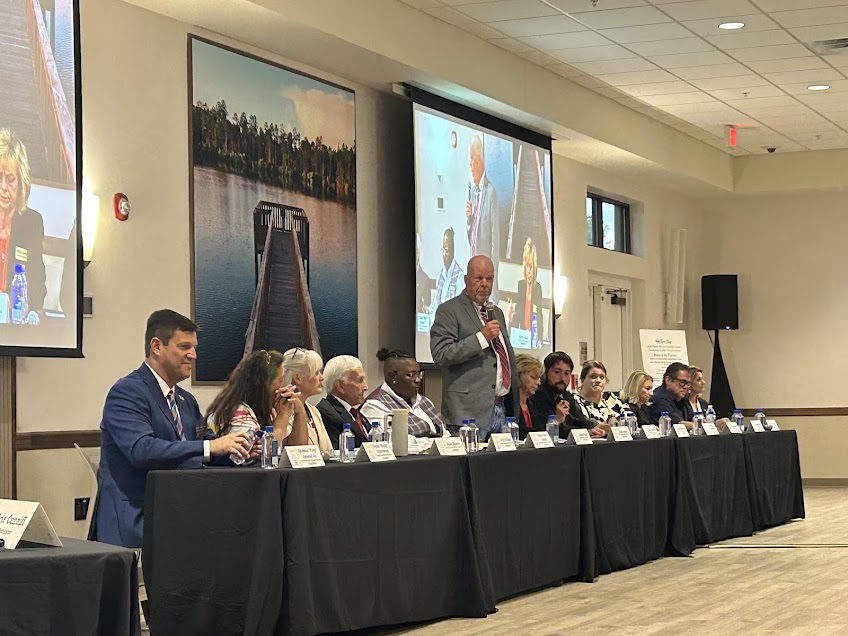
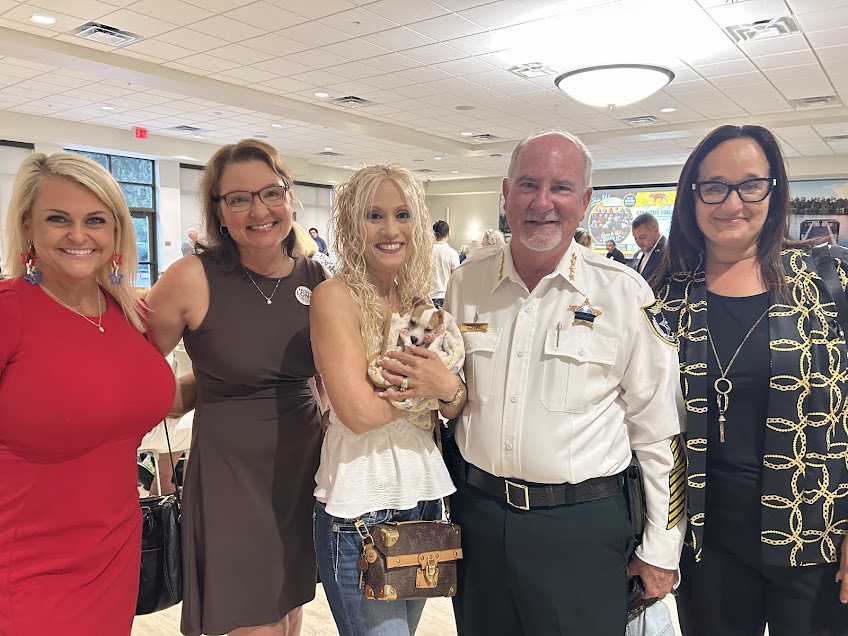
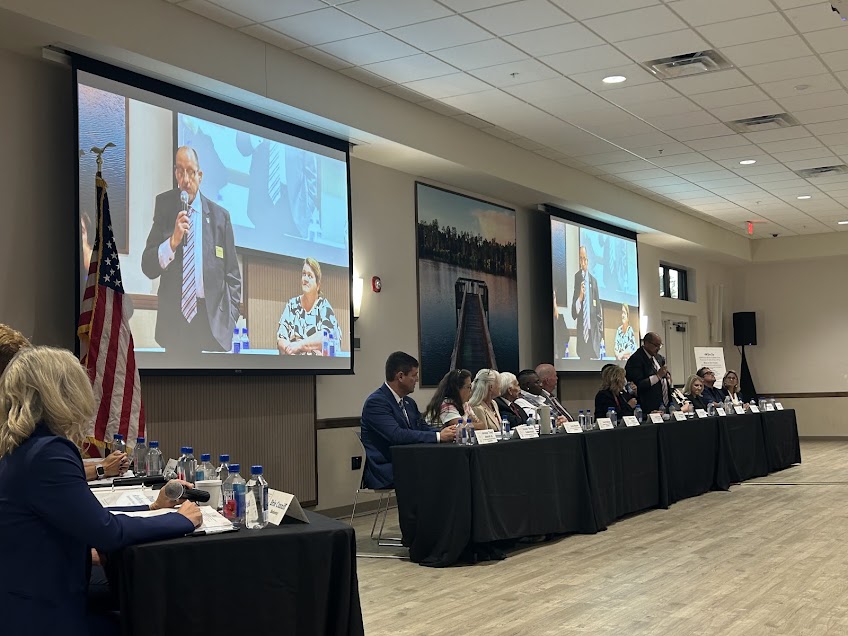
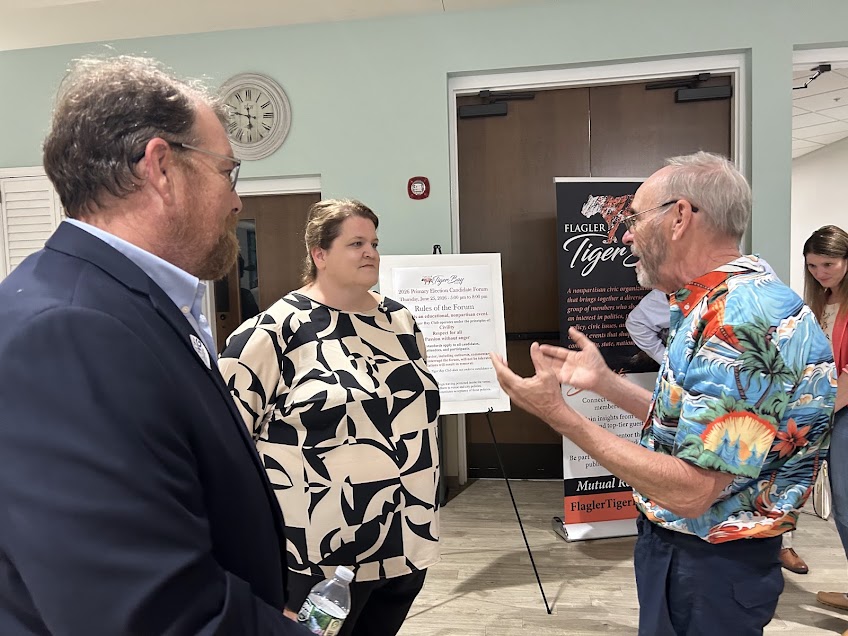
PALM COAST, Fla. — Growth, infrastructure, transparency, and quality of life took center stage Thursday evening as candidates for Palm Coast City Council and the Flagler County Commission answered tough questions from a community panel during the Flagler Tiger Bay Club’s 2026 Candidate Forum.
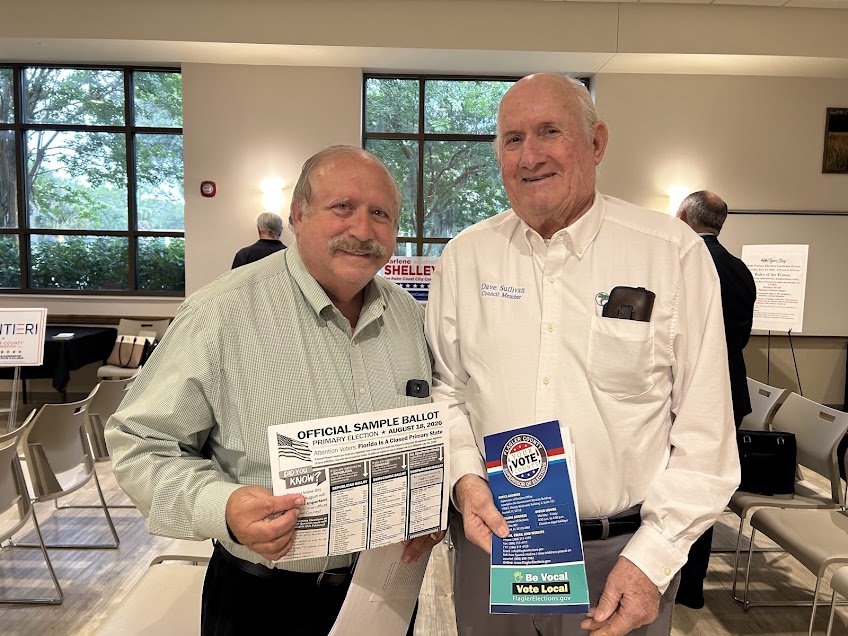
Held at the Palm Coast Community Center, the event brought together a wide range of candidates seeking local office, each responding to questions posed by Tiger Bay panelists representing business, faith, education, nonprofit and government sectors.
A recurring theme throughout the night was the challenge of balancing explosive growth with infrastructure demands.
Palm Coast City Council candidate Jimmy Hengy emphasized what he called an “infrastructure first” approach when asked how he would address rising utility costs and growth pressures.
“We’re in a quagmire with our water utilities,” Hengy said. “We have the $248 million bond that was taken out to upgrade our water facility systems. But unfortunately, that’s not going to handle the 6,000 infill lots already approved for development or the additional 13,000 lots that are already approved.”
Hengy warned that more development could create even greater infrastructure shortfalls.
County Commission candidate Anna Jones took aim at impact fees and government spending, saying current fees are insufficient to cover the true cost of growth.
“The impact fees do not cover the infrastructure that needs to be done in this city or county,” Jones said. “Nobody wants to raise impact fees or taxes, but there’s going to be some pain, and that’s what it has to be.”
Jones also called for a forensic audit of government spending, stating, “There’s so much wasteful spending, that’ll eliminate more than 10% right there.”
For incumbent County Commissioner Leann Pennington, much of the growth issue stems from Tallahassee.
“Growth is not a Flagler County unique problem, it’s a state of Florida problem,” Pennington said. “We have been greatly restricted by home rule.”
Pennington cited recent state legislation she believes has weakened local governments’ ability to control development and protect agriculture.
“There is a new law out, Class 686,” she said. “It will allow agricultural enclaves to turn into residential without even coming in front of board. That is a big concern out west.”
Economic development also emerged as a major topic.
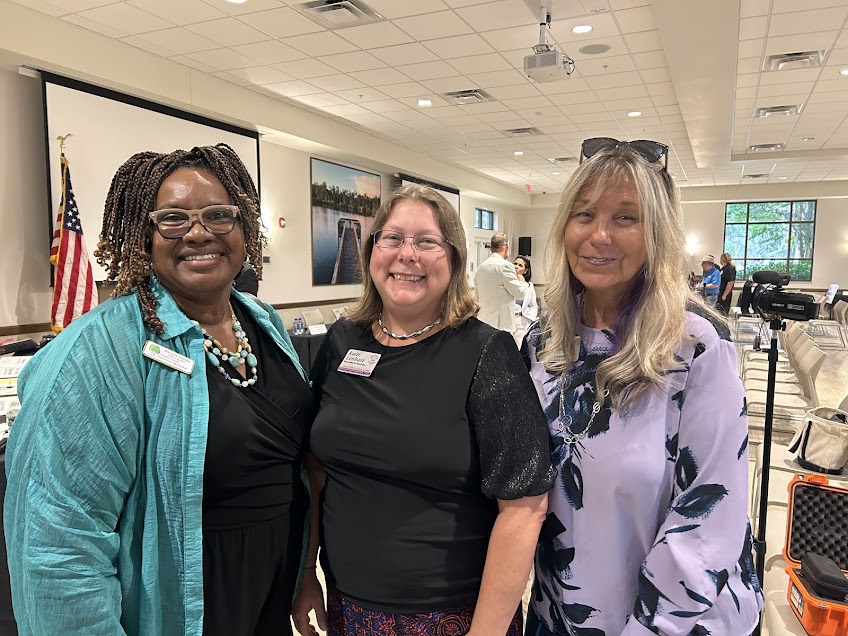
County Commission candidate Teresa Pontieri called economic development the county’s biggest challenge and repeatedly emphasized the need for a strategic long-term plan.
“I hope at the end of this conversation, you’re tired of me saying the words economic development because that’s the number one issue facing both the city and the county,” Pontieri said.
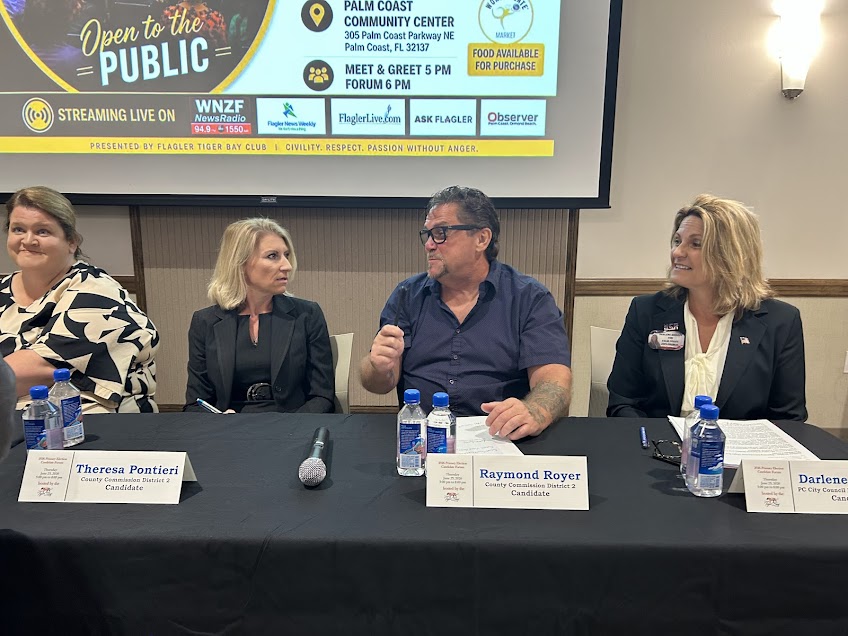
Pontieri drew a distinction between commercial growth and economic development.
“Bringing in more commercial is definitely needed, but that’s a short game,” she said. “When I talk about industry, I mean creating an education pipeline and attracting higher-paying jobs.”
Public safety remained a top priority for candidate Greg Feldman, who leaned heavily on his law enforcement background when asked about emergency services.
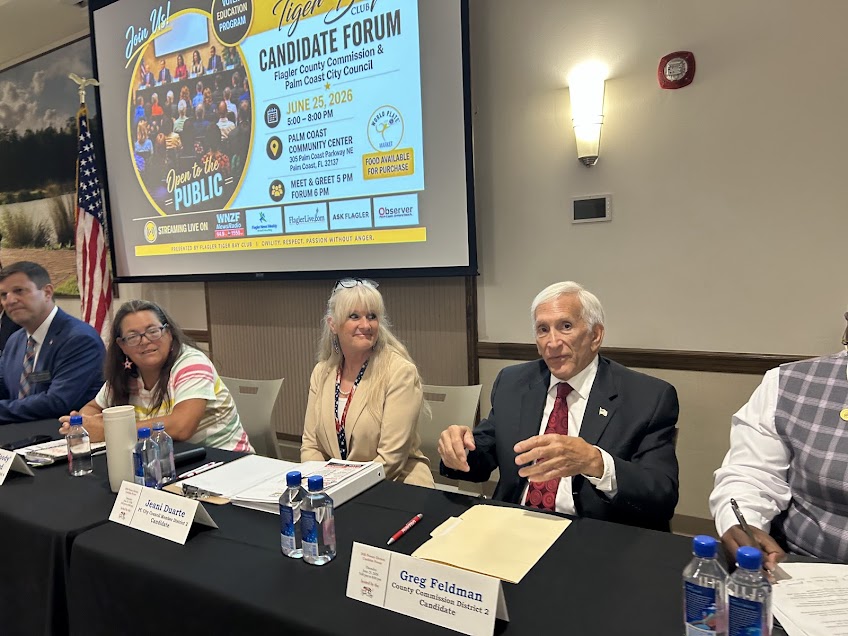
“This county is in the top 1% of safe communities in the entire country,” Feldman said. “But if there is a sudden population explosion, we need to work with Chief Tucker to make sure that we keep ahead and not be behind.”
Several candidates focused on transparency in government, particularly related to development approvals.
City Council candidate Darlene Shelley argued residents are increasingly frustrated by decisions they feel are being made without their input.
“We cannot continue on this path,” Shelley said. “Rapid growth has brought flooding, traffic, strained utilities, and rising costs that are hurting our families and seniors.”
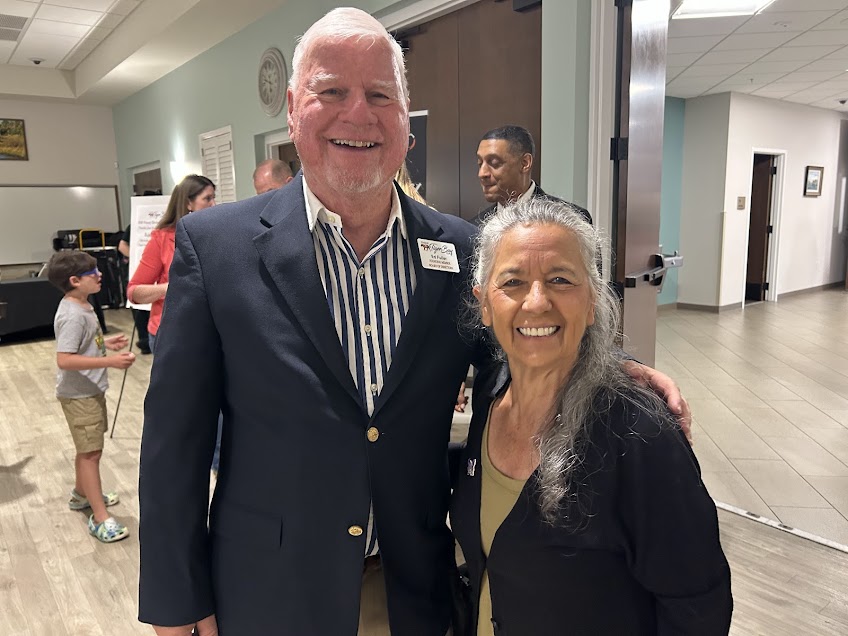
Shelley also strongly advocated for environmental protections.
“We need to protect our families and our health,” she said. “We need to protect our residents, our homes, and our environment first.”
Candidate Raymond Royer criticized the planning and zoning process, calling it fundamentally flawed.
“Planning and zoning has gotten way out of hand,” Royer said. “We have to go back to the master plan.”
On small business support, candidate Dylana Dee Galery stressed workforce partnerships and local entrepreneurship.
“How can we focus to thrive their businesses?” Galery said. “Working with our technical college and connecting youth to trades is a big part of that.”
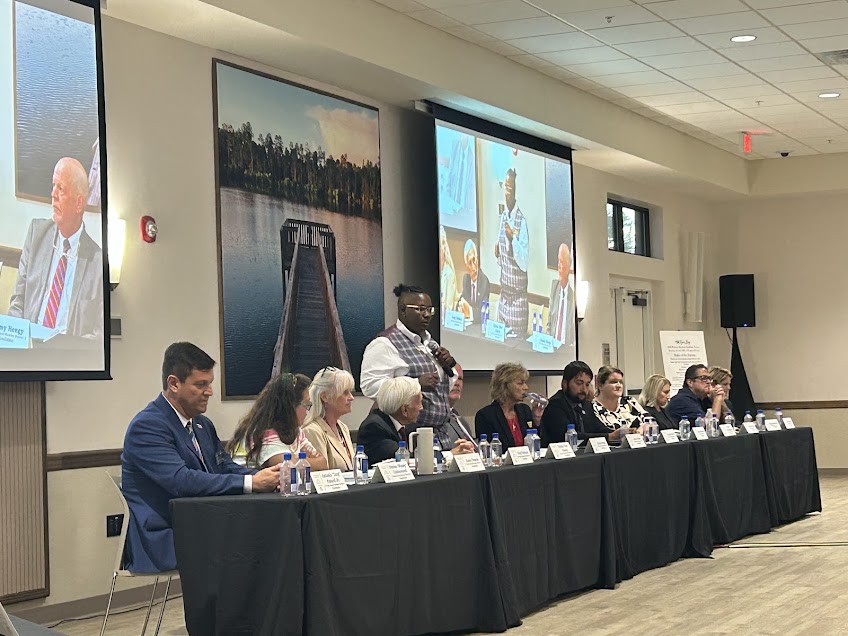
Throughout the forum, candidates repeatedly returned to themes of controlled growth, fiscal accountability, and preserving the community’s character.
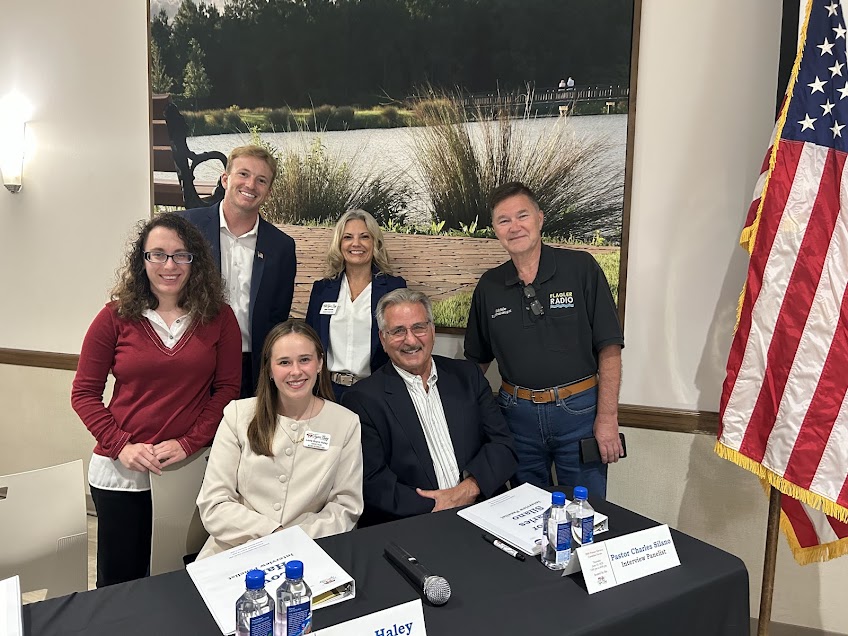
Flagler Tiger Bay Club panelists guided the conversation through issues ranging from flooding and farmland preservation to affordable housing, nonprofits, law enforcement, and public trust.
By the end of the evening, one thing was clear, voters in Palm Coast and Flagler County will face important decisions this election season as the community grapples with how to manage growth while protecting the quality of life many residents say brought them here in the first place.
Primary elections will be held August 18.
Candidate Forum Summary: Perspectives, Key Issues & Proposed Solutions
(Based on candidate responses during the Flagler Tiger Bay Club 2026 Candidate Forum)
Palm Coast City Council
Candidate: Tony Amaral Jr., Palm Coast City Council, District 2
Perspective:
Practical, infrastructure-minded, collaborative. Presents himself as experienced in utilities and city systems.
Key Issues:
-
Infrastructure lagging behind development
-
Lack of city/county coordination
-
Transparency in development approvals
Solutions:
-
Prioritize infrastructure concurrency with growth
-
Increase city-county partnership on roads and planning
-
Slow down questionable development approvals for public review
-
Long-term strategic planning over reactive decisions
Theme: “County with city, not county versus city.”
Candidate: Jeani Duarte, Palm Coast City Council, District 2
Perspective:
Government reform advocate focused on charter accountability.
Key Issues:
-
City charter changes without voter transparency
-
Flooding infrastructure failures
-
Limited recreational access
Solutions:
-
Audit and restore charter integrity
-
Prioritize drainage and dredging in flood-prone areas
-
Expand public pool access and swim programs
-
Better utilize public lands for recreation
Theme: “Make right the wrongs.”
Candidate: Jimmy Hengy, Palm Coast City Council, District 2
Perspective:
Fiscal conservative focused on infrastructure and local business incubation.
Key Issues:
-
Property tax reform impacts
-
Utility costs
-
Overdevelopment
-
Lack of economic diversity
Solutions:
-
Audit city staffing and services for efficiency
-
Protect core services first (fire, police, utilities)
-
Develop small business incubators
-
Build a local business referral network
-
Focus on tech and service industry jobs
Theme: “Infrastructure first.”
Candidate: Dylana Dee Galery, Palm Coast City Council, District 4
Perspective:
Emerging leader focused on listening, youth, and small business.
Key Issues:
-
Supporting local entrepreneurs
-
Workforce development
-
Small business sustainability
Solutions:
-
Strengthen partnerships with technical colleges
-
Connect youth with trade careers
-
Support local business mentorship and growth
-
Increase community engagement before policy decisions
Theme: “Leadership is listening.”
Candidate: John Kvedris, Palm Coast City Council, District 4
Perspective:
Growth skeptic, data-focused, business-minded.
Key Issues:
-
Rapid uncontrolled development
-
Taxpayer burden for infrastructure
-
Need for collaborative leadership
Solutions:
-
Hold developers financially accountable
-
Slow growth until infrastructure catches up
-
Conduct top-to-bottom budget reviews
-
Use collaborative “spider web” stakeholder model
Theme: “Look at the data first.”
Candidate: Ramon Marrero, Palm Coast City Council, District 4
Perspective:
Community nonprofit leader focused on economic balance and citizen relief.
Key Issues:
-
Flooding and infrastructure
-
Transparency
-
Overdevelopment
-
Job creation
Solutions:
-
Tie economic development directly to infrastructure improvements
-
Pursue grants and bonds instead of new taxes
-
Improve public communication and trust
-
Build consensus across sectors
Theme: “No more burden on citizens.”
Candidate: Darlene Shelley, Palm Coast City Council, District 4
Perspective:
Quality-of-life candidate emphasizing environment, health, and controlled growth.
Key Issues:
-
Overdevelopment
-
Flooding
-
Rising utility costs
-
Environmental degradation
Solutions:
-
Stop incompatible industrial development
-
Protect wetlands and air quality
-
Pursue environmental grants
-
Strengthen citizen input in planning
-
Demand government action, not just listening
Theme: “Protect health, homes, and quality of life.”
Flagler County Board of County Commissioners
Candidate: Greg Feldman, Flagler County Commission, District 2
Perspective:
Public safety-first candidate with law enforcement background.
Key Issues:
-
Workforce retention
-
Public safety readiness
-
Economic diversification
Solutions:
-
Recruit light industry and career-based employers
-
Expand parks, trails, and quality-of-life amenities
-
Keep fire and EMS ahead of population growth
-
Maintain strong law enforcement resources
Theme: “People need careers, not just jobs.”
Candidate: Teresa Pontieri, Flagler County Commission, District 2
Perspective:
Policy-driven, strategic, strong on transparency and economic development.
Key Issues:
-
Economic stagnation
-
Lack of higher-paying jobs
-
Government transparency
-
Taxpayer burden from growth
Solutions:
-
Create a long-term economic development strategic plan
-
Build education-to-industry pipelines (STEM/workforce)
-
Maximize grants before considering taxes
-
Raise impact fees to maximum legal levels
-
Improve transparency in government processes
Theme: “Economic development changes everything.”
Candidate: Raymond Royer, Flagler County Commission, District 2
Perspective:
Anti-establishment watchdog focused on planning reform.
Key Issues:
-
Planning and zoning approvals
-
Development compatibility
-
Infrastructure bottlenecks
-
Excessive lobbying
Solutions:
-
Overhaul planning and zoning process
-
Restore original land-use vision
-
Increase direct lobbying by local leaders in Tallahassee
-
Slow incompatible mixed-use projects
Theme: “Go back to the master plan.”
Candidate: Denise Woody Calderwood, Flagler County Commission, District 4 (Write-In)
Perspective:
Community-centered, nonprofit-focused, social services advocate.
Key Issues:
-
Affordable housing
-
Senior services gaps
-
High ALICE (Asset Limited, Income Constrained, Employed) population
-
Need for nonprofit support
Solutions:
-
Expand public-private partnerships (P3s)
-
Increase social services and aging-in-place programs
-
Strengthen nonprofit collaboration
-
Focus on community-first policies over partisan politics
Theme: “We’re all a family.”
Candidate: Anna Jones, Flagler County Commission, District 4
Perspective:
Anti-waste, anti-overdevelopment, strong fiscal oversight.
Key Issues:
-
Wasteful spending
-
Infrastructure not keeping pace with growth
-
Impact fees too low
Solutions:
-
Conduct forensic audits
-
Enforce Growth Management Act concurrency requirements
-
Increase accountability for developers
-
Spread budget cuts evenly if needed
-
Reevaluate impact fee structures
Theme: “Growth must pay for itself.”
Candidate: Drew Moss, Flagler County Commission, District 4
N/A
Candidate: Leann Pennington, Flagler County Commission, District 4
Perspective:
Incumbent emphasizing state-level constraints and local collaboration.
Key Issues:
-
Loss of farmland
-
State preemption limiting local control
-
Mental health and substance abuse services
Solutions:
-
Advocate against state laws reducing agricultural protections
-
Preserve farmland through local zoning
-
Expand SMA healthcare and substance abuse access
-
Continue intergovernmental cooperation
Theme: “The erosion of home rule is the biggest issue.”
Major Forum-Wide Trends
-
Growth & Infrastructure
Nearly every candidate agreed growth is outpacing roads, drainage, and utilities.
-
Economic Development
Strong push for higher-wage jobs, industry, and workforce pipelines.
-
Transparency
Candidates repeatedly criticized lack of transparency in land-use and charter decisions.
-
Taxpayer Protection
Most opposed raising taxes and preferred grants, impact fees, or efficiencies.
-
Quality of Life
Environmental preservation, parks, and community identity were recurring concerns.
Overall Divide:
-
Growth Reformers: Shelley, Jones, Kvedris, Royer, Duarte
-
Managed Growth Advocates: Pontieri, Pennington, Amaral, Feldman
-
Community/Service-Oriented Candidates: Calderwood, Marrero, Galery, Hengy