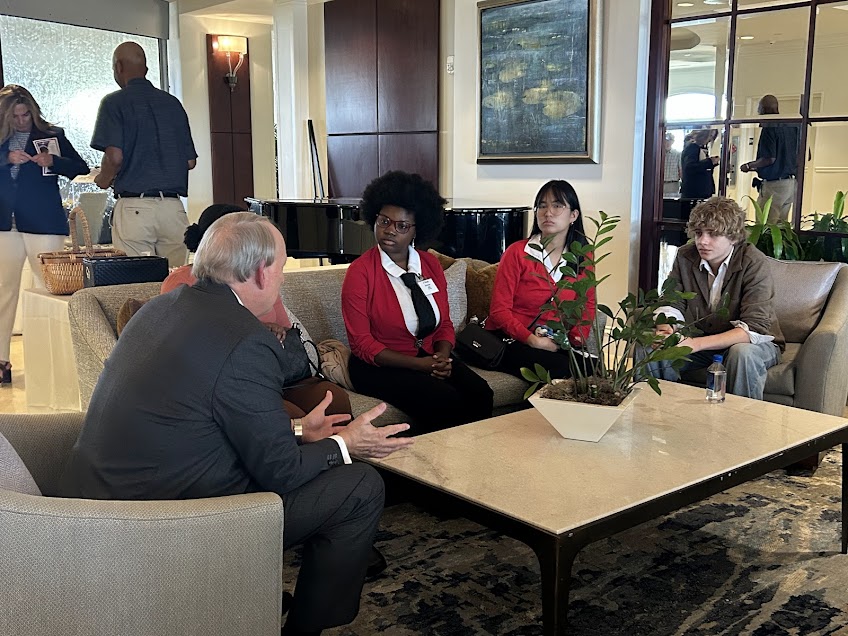




































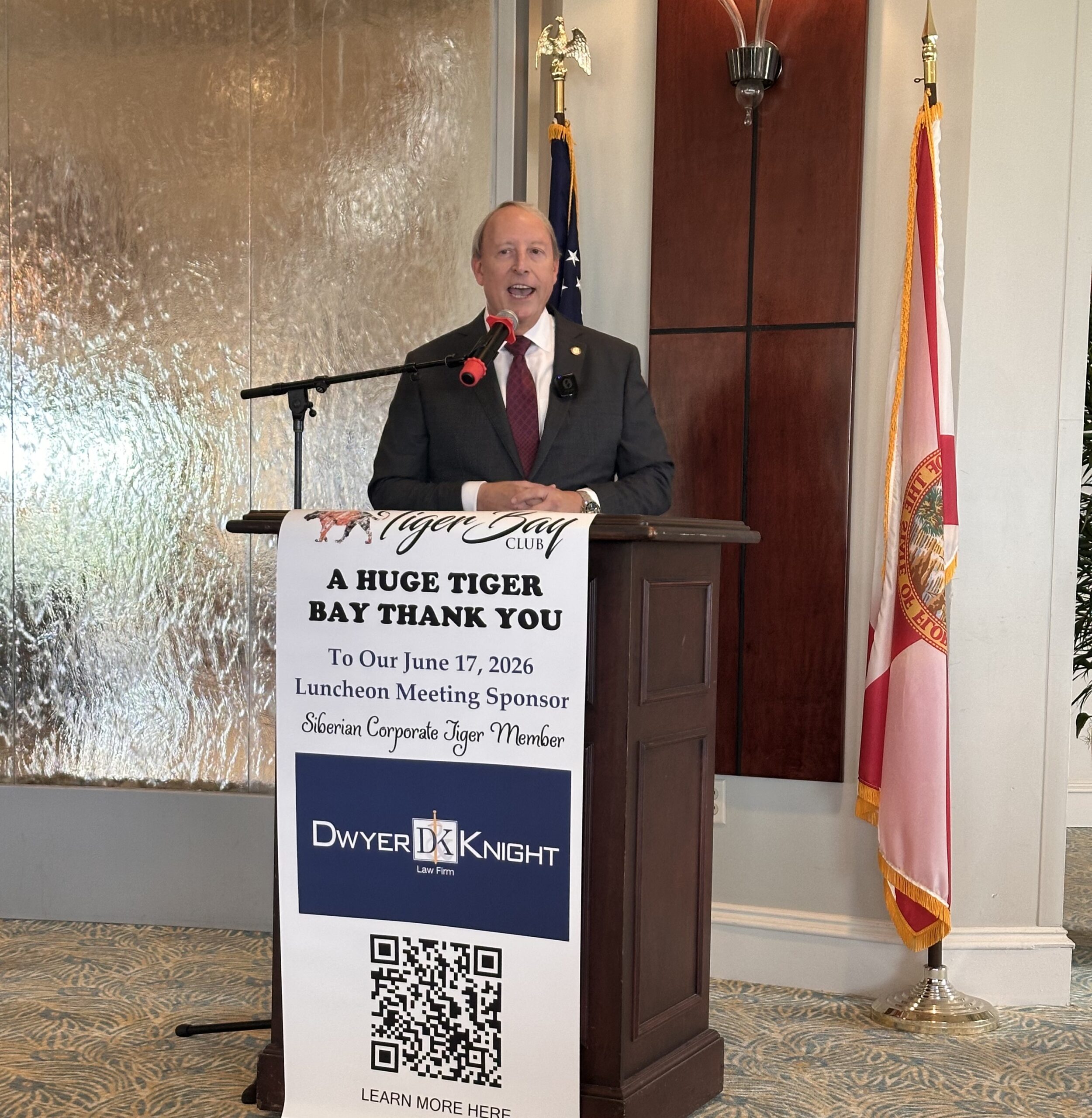
PALM COAST, Fla. — Former Florida Senate President Bill Galvano offered Flagler Tiger Bay Club members a candid look inside Florida’s legislative process Wednesday, highlighting the policies he believes have fueled the state’s economic growth while acknowledging significant challenges lawmakers must continue to address.
Speaking before a packed audience at the Hammock Dunes Club, Galvano drew on his 16 years in the Florida Legislature — eight years in the House and eight years in the Senate — to explain what he described as the long-term decisions that have helped make Florida one of the nation’s fastest-growing states.
“What I hope they take away is that there have been some real successes in this state, and to get some insights as to what happens really behind the scenes, versus just what you read about in the newspaper,” Galvano said before the event. “Tiger Bay is a great organization. I think people really come here to learn and be more informed.”
Florida’s Economic Formula
Galvano pointed to Florida’s balanced budget requirement, tax reductions, debt reduction, and fiscal discipline as key reasons the state continues to attract new residents and businesses.
Among the statistics he shared, Florida gains a taxpayer approximately every two minutes while states such as California continue to experience population losses. He noted that Florida’s debt has been reduced dramatically over the past decade and that lawmakers have consistently cut taxes while maintaining strong bond ratings.
“The way we conducted ourselves over the last few decades has been solid,” Galvano said. “It has led to a very, very stable economic environment.”
He credited leaders from both political parties and multiple administrations for maintaining policies that prioritize economic growth while avoiding the financial challenges facing many other states.
Education and Public Safety
Galvano highlighted Florida’s higher education system as one of the state’s greatest success stories.
He discussed performance-based funding for universities, expansion of Bright Futures scholarships, and educational choice initiatives that have helped Florida earn national recognition for higher education outcomes.
“We created performance-based funding,” he said. “Universities had to put skin in the game.”
The former Senate president also reflected on one of the most difficult moments of his legislative career following the 2018 Marjory Stoneman Douglas High School shooting in Parkland.
Galvano detailed the bipartisan response that followed, including raising the minimum age to purchase firearms, implementing red-flag laws, creating the Office of Safe Schools, funding mental health initiatives, and establishing the School Guardian Program.
“There’s no reason for me to be more safe in this building than a school kid going to school to learn,” Galvano recalled thinking after visiting the Parkland campus.
Navigating Crisis
Galvano also discussed Florida’s response to major hurricanes and the COVID-19 pandemic, describing both as defining moments for state leadership.
He praised Florida’s emergency management system and its ability to quickly mobilize resources after hurricanes Irma and Michael, helping communities recover while maintaining fiscal stability.
During the pandemic, Galvano said Florida’s decision to reopen schools and businesses earlier than many states contributed to a surge in population growth and economic activity.
“We realized this is not working. We can’t live like this,” Galvano said, describing discussions surrounding prolonged lockdowns. “Let’s reopen businesses to the extent we can. Let’s reopen schools.”
Challenges Ahead
Despite Florida’s successes, Galvano warned that lawmakers still face significant challenges.
Affordable housing remains one of the most pressing concerns, he said, as population growth continues to drive up costs for residents. He also identified property insurance and infrastructure investment as major issues requiring long-term solutions.
“Because of our success, we have the affordability problem,” Galvano said.
He argued that Florida must continue investing in transportation corridors, utilities, and public infrastructure to keep pace with continued growth.
“I don’t think the state is going to depopulate,” he said. “The influx may slow, but the tourist influx is going to keep coming.”
The Importance of Civil Dialogue
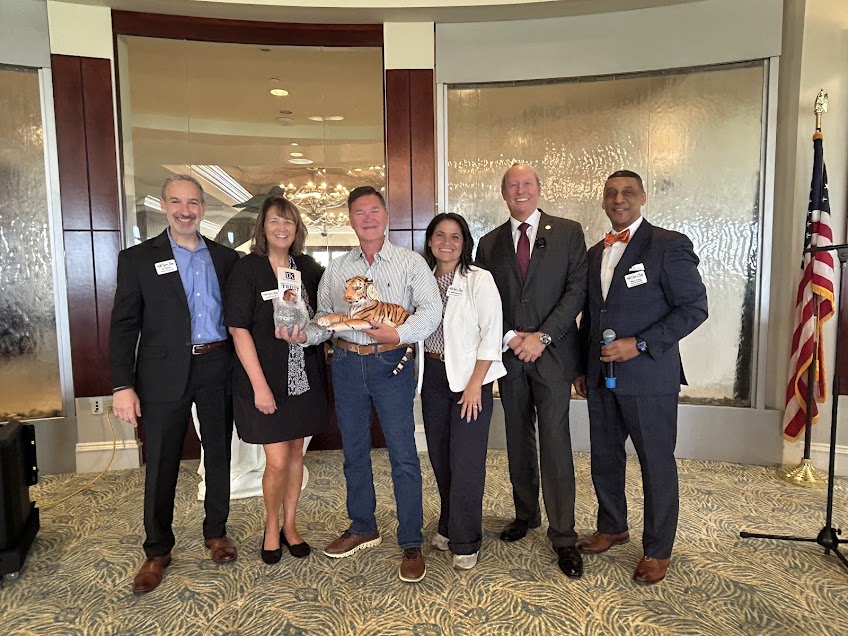
Flagler Tiger Bay Club President Jay Scherr praised Galvano for presenting both the accomplishments and shortcomings facing Florida.
“The takeaway was, what has Florida done well?” Scherr said. “He went over some of the key points on some things that really are going well in the state. But then he also took the other side of that coin and covered a couple of things that are not going as well yet — things that can be improved upon.”
Scherr said the discussion reflected the mission of Tiger Bay Clubs to encourage thoughtful civic engagement and informed conversations across political lines.
“Hugely important,” Scherr said when asked about bringing together diverse political viewpoints. “When this group comes into this room, they leave all of that behind. They’re open to learning. They’re open to asking better questions.”
Dr. Joe Saviak, Flagler Tiger Bay Club’s Second Vice President, said Galvano’s presentation demonstrated why he remains one of Florida’s most respected public policy leaders.
“As the President of the Florida Senate, Bill Galvano’s transformational leadership produced public policy results which have ensured that Florida continues to remain a national leader in education, job creation, health care, and public safety,” Saviak said. “He has an exceptional understanding of evidence-based public policy making him the perfect speaker for today’s topic. Our members loved the master class in leadership and public policy that he taught today.”
Galvano closed his remarks by encouraging citizens to stay engaged in the political process and to focus on practical problem-solving rather than partisan division.
“I think Tiger Bay Clubs are perfect for this type of thinking and this nonpartisan sharing of ideas,” he said. “It’s valuable.”