







































A vitally important role of leadership is to invest time, energy, and effort to ensure others have the knowledge and skills to provide peak performance. They also want to develop leaders who can grow more leaders.
How do they do this?
Leaders serve as examples to instruct and inspire others. They are continually learning. They provide plenty of leadership and professional development opportunities for the teams they lead. Leaders encourage members of their team to read or listen to books, watch videos, and listen to podcasts on leadership, attend classes and conferences, spend time with mentors, meet and discuss leadership, and become active in professional associations. They work with members of their team on specific and individualized professional and leadership development plans and aid them in strategies for career growth. They identify strengths to optimize and areas for improvement to help team members fulfill their potential.
They see people development as a major role and responsibility. Their daily schedules involve significant time spent observing, evaluating, mentoring, and coaching members of their team. They follow up to see if gains in learning and performance are actually occurring. They want to ensure they are giving every tool, resource, and experience to others to help them be their best.
They create and foster a culture of professional growth and leadership development. Everyone at all levels in the organization understands that they must be growing as professionals and leaders and helping others to do the same. Everyone sees the success of others as their job and enthusiastically embraces this mission. Managers and supervisors are promoted and evaluated on the key metric of how much they do to aid those they lead to thrive and excel. The executive or manager who does not concentrate on this critical role will not last in leadership in this type of organization.
We often say, “Hire character and teach skills.” Focus first on identifying, recruiting, hiring, and retaining individuals who match your mission, share your culture and values, and fit with and add to your team. Ensuring subject matter competency and developing specific skills to ensure optimal performance is a function of time and training.
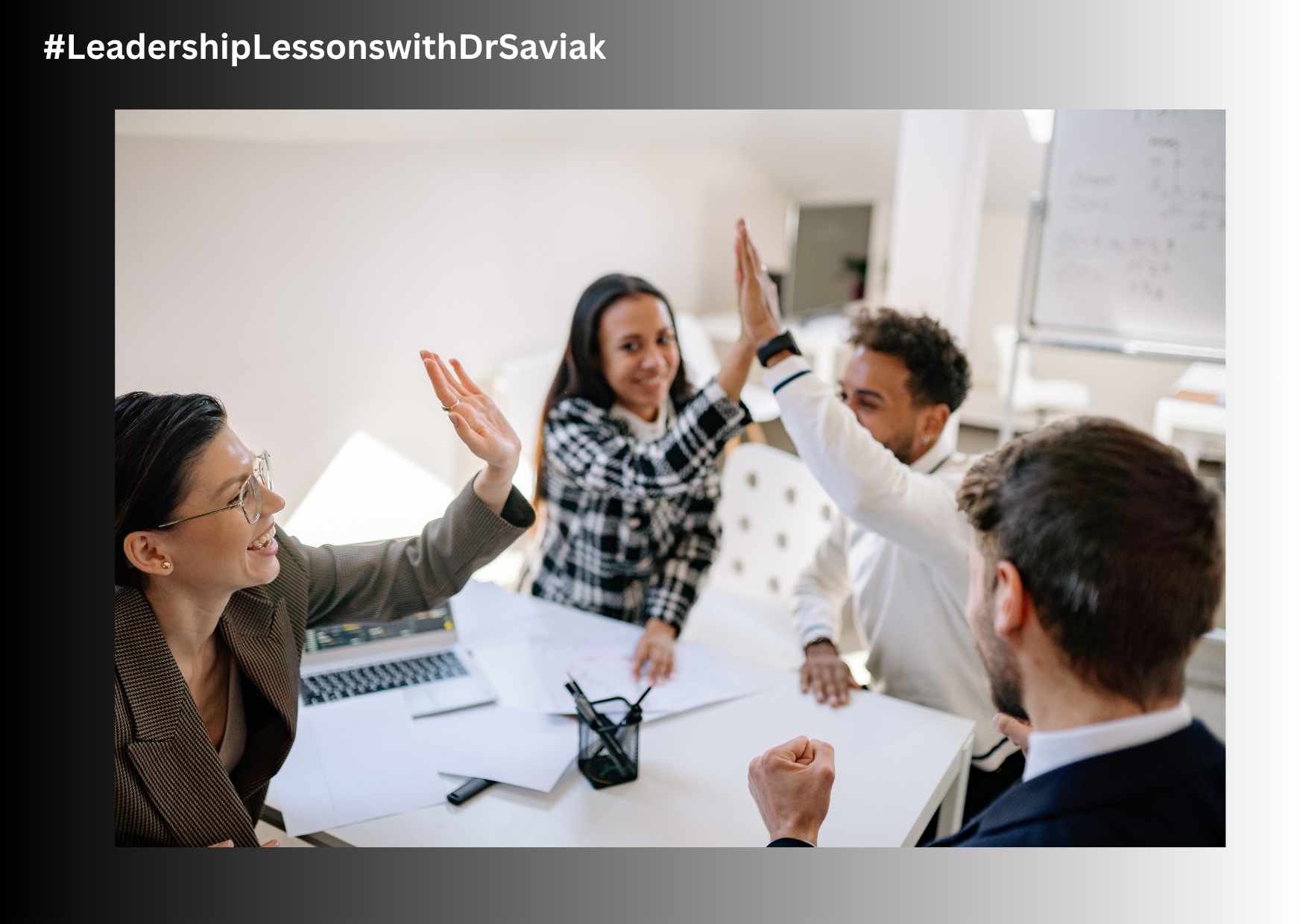
Jack Welch once observed about leadership that “you have to love it when other people win.” Your job as a leader is to make sure they do.
Sources: Abrashoff, 2002; Blanchard, 2011; Collins, 2001; Drucker, 2001; Grant, 2017; Kotter, 2012; Lencioni, 2012; Maxwell, 1998; Welch, 2005.
#LeadershipLessonsWithDrSaviak