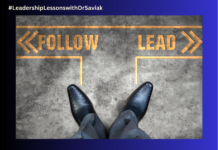
Leaders think in terms of decades not days.  Every day is about what kind of organization, community, or country am I leaving for the next leader and his or her successors?  By defining success as a long term and sustained metric, they think and act differently to achieve this goal.

There will be no future or maintained greatness without a strong and continuous commitment to those who can lead it.  Effective executives are always investing in identifying, mentoring, coaching, equipping, and ensuring those who follow them now and far into the future will excel with the responsibilities of leadership.  They provide classes, seminars, books, articles, podcasts, webinars, executive job shadowing, and any other resource or experience to teach leadership.

However, it requires more than informing and educating.  Inspiring and encouraging are essential.

Leaders have to provide examples which motivate others to assume these duties.  People follow your example not your email or speech.

Leaders have to identify individuals in the organization and spend time encouraging them to want to promote into leadership roles.  Some of your best leaders need to be told they should pursue being a supervisor, manager, or executive.  The person who is dying to be in charge can actually be a problem.  The individual who needs someone they trust and respect to ask him or her to consider preparing for a leadership role often turns out to be an excellent choice.

We need to always remember that if done right, leadership is difficult and taxing.  It is not about applause, awards, power, prestige, celebrity, perks, and privileges.  As General Powell would say, “People are bringing you their problems all day to solve.”  Therefore, the right individuals who have the character and capacity to succeed in leadership will need your motivation.

Your greatest legacy as a leader will be those you inspired and prepared to be the leaders we all want to follow.  Spend every day with this objective foremost in everything that you do, and you will truly have succeeded as a leader.

Sources:  Abrashoff, 2002; Blanchard, 2011; Collins, 2001; Drucker, 2001; Grant, 2017; Kotter, 2012; Lencioni, 2012; Maxwell, 1998; Welch, 2005.

Dr. Joe Saviak is an experienced senior executive, leadership and management consultant, author, researcher, and college professor. He has served on senior management teams responsible for significantly improving the performance of agencies with over 1,000 employees and annual budgets in excess of $100 million. He serves as an attorney with the Douglas Law Firm.  Reach Dr. Saviak at Joe@DrJoeSaviak.com