





































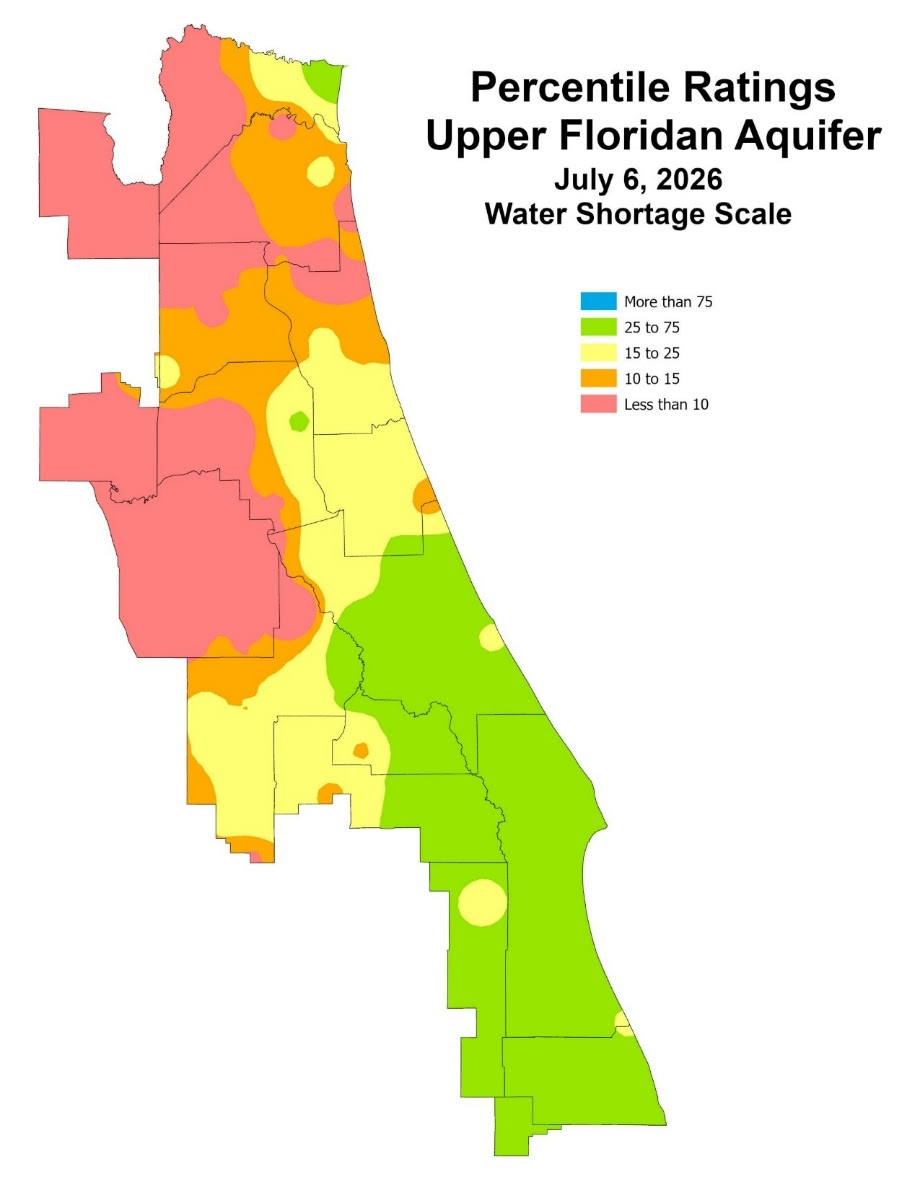
Palatka, Fla., July 9, 2026 — While many areas across northeast and central Florida have received frequent rainfall in recent weeks, the St. Johns River Water Management District (District) is reminding residents, businesses and large water users that drought recovery takes time and continued water conservation remains crucial.
Some locations have experienced daily or multiple rounds of rainfall each week, bringing welcome relief from abnormally dry conditions. However, months of significant rainfall deficits cannot be erased by a few weeks of summer storms. Groundwater levels, river flows and other water supply indicators respond more slowly than rainfall totals and will require above-average rainfall over an extended period to fully recover.
“Recent rainfall has been encouraging, and we’re seeing improvements in some areas,” said St. Johns River Water Management District Director of Water Supply Planning and Assessment Clay Coarsey. “However, our groundwater and surface water systems recover gradually. It will take sustained, above-average rainfall over an extended period before water resources return to normal. Most of the area covered by the water shortage will need at least 3 feet of rainfall over the next 3 months to return to normal conditions. Continued conservation is necessary to support that recovery.”
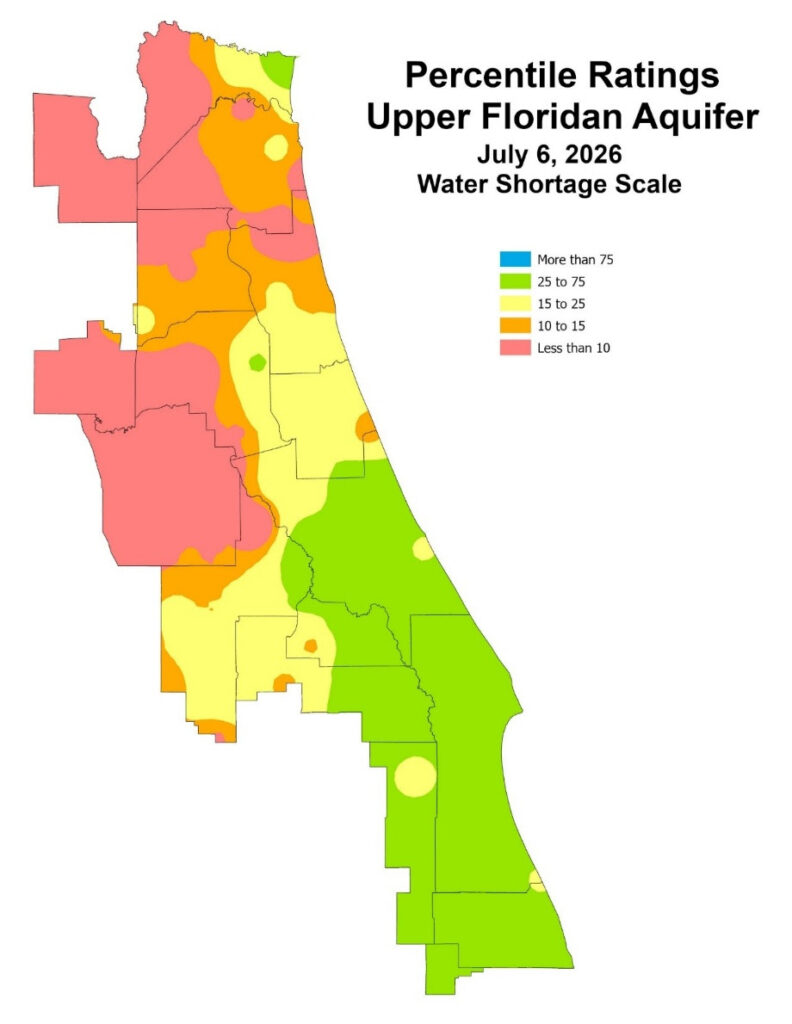
The District’s Phase III Extreme Water Shortage declaration remains in effect. The declaration was issued in response to prolonged dry conditions, declining groundwater levels and reduced river flows.
Mandatory restrictions remain in place, including:
-
Residential and commercial properties are limited to one day per week of landscape irrigation.
-
Landscape irrigation is prohibited between 8 a.m. and 6 p.m. daily.
-
Commercial and industrial users must suspend certain non-essential water uses.
-
Golf course fairway irrigation is limited to one day per week.
-
Aesthetic water use, such as decorative fountains, is prohibited.
-
Street and pressure washing activities face additional restrictions.
-
Irrigation restrictions for new plantings, including sod, have been tightened.