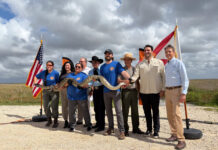
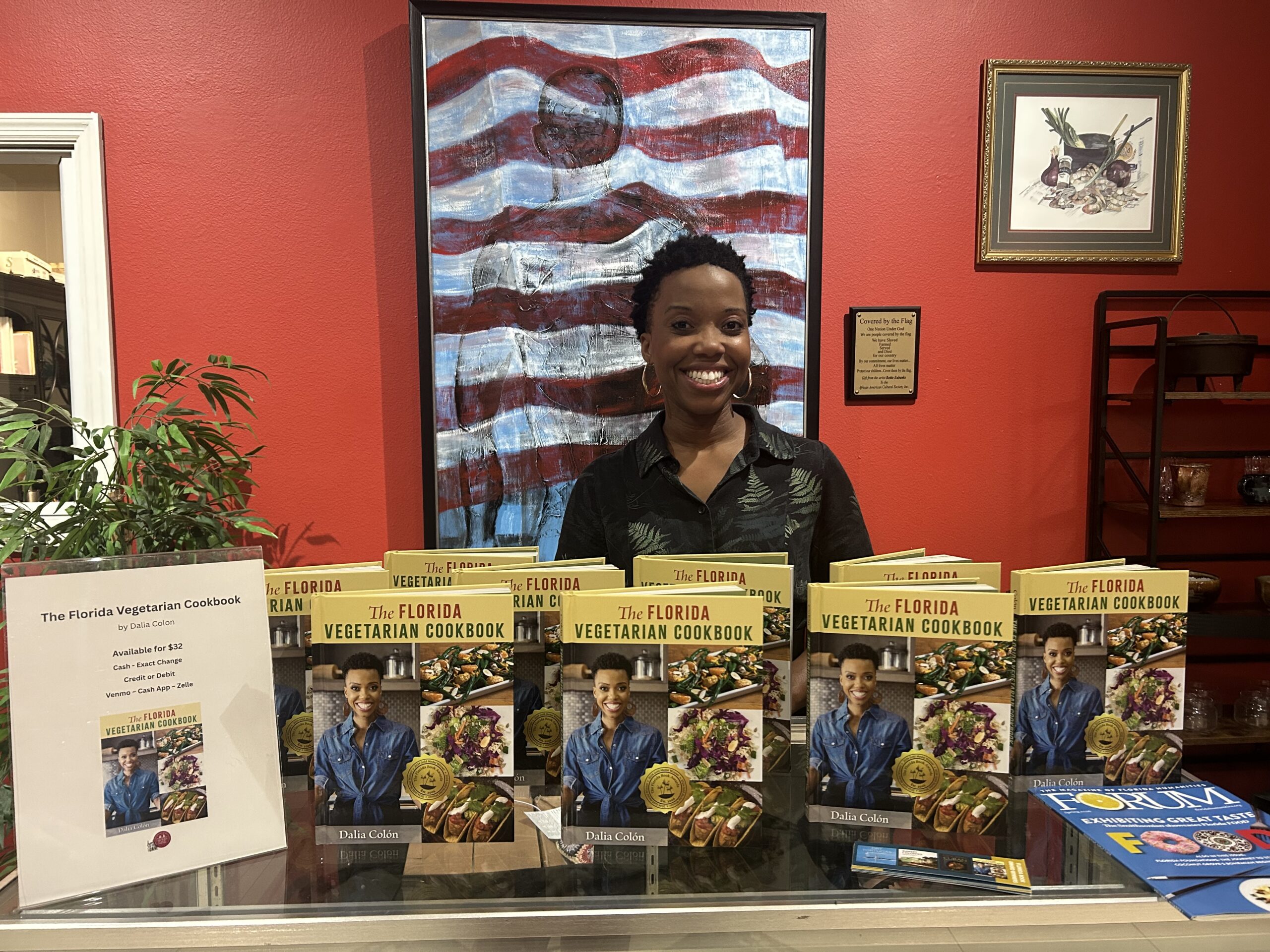
Emmy Award-winning multimedia journalist and self-declared foodie Dalia Colón was a guest speaker during the opening of the Smithsonian backed food exhibit “From Seed to Soul” on display at the African American History Museum & Cultural Center in Palm Coast. Offering up her vegetarian cookbook during the event, it was a great opportunity to talk food with the Florida Humanities speaker.

Q: Tell us about yourself and about your book.

A:
“My name is Dalia Colón. I’m a multimedia journalist in Tampa. The Florida Vegetarian Cookbook is a book I wrote featuring Florida fruits, vegetables, and herbs—and the stories behind them.”

Q: What made you decide to write this book?

A:
“I produce and host a food podcast for the NPR network called The Zest, based out of Tampa Bay’s NPR station, WUSF. During the pandemic, I went from being just the producer to also becoming the host after our host left.

At the same time, I was doing a lot of food writing for Florida Humanities for their magazine, and food just kept becoming a bigger part of my work. During COVID, the publisher actually approached me and asked if I’d like to write a cookbook. It was never something on my vision board, but I’m a vegetarian, and I know a lot of meat eaters who want to eat more plant-based, even if it’s not all the time. I thought this could be a good resource for them.”

Q: How does your work tie into the Smithsonian exhibit?

A:
“I’m actually the lead scholar for these exhibitions. There are seven Smithsonian exhibitions around the state of Florida, and I was part of the committee that selected the organizations that would receive grant funding and support. I’ve been involved with this project for about two years.

That’s why Meshella Woods invited me here for the opening. I also happen to have a cookbook, so I bring it wherever I go. Normally, I give a full talk—I was in Jacksonville yesterday speaking for Florida Humanities on Telling Florida Food Stories.

Q: What did you plan to speak about here?

A:
“We’re just talking for about ten minutes about food history and how the foods we think of as everyday—and not special—are actually very special to our descendants and future generations.

It’s worth preserving food memories, recipes, and photos for the next generation, because one day they may be the ones putting together an exhibit about what we’re eating today.”

Q: In your travels, have you discovered foods or dishes that feel distinctly Floridian beyond the usual tourist foods?

A:
“I’d go back to Indigenous foodways—about 12,000 years—and talk about the Three Sisters: squash, corn, and beans. These are companion crops, grown together because they support one another. They’re called the Three Sisters because they’re always in lockstep.

Together, they form a complete protein and were the basis of Native American diets for thousands of years.”

Q: Why do you consider those foods foundational to Florida?

A:
“Squash—whether acorn squash, butternut squash, pumpkin—was here before anyone else arrived. Indigenous people even used squash as a sweetener before European sugar came here.

To me, that’s fundamentally Floridian. Those ingredients existed before colonization. Shellfish and meat were more of a treat—they weren’t guaranteed. Daily life was mostly vegetables and what you could grow.”

Q: How do celebration foods shape our understanding of culture?

A:
“A lot of foods we associate with certain ethnicities are actually celebration foods, not everyday foods.

For African Americans, people might think of fried chicken. But for enslaved people who only had one day off a week and had so much to do, slaughtering, plucking, and frying a chicken wasn’t practical for everyday life. That was a celebration food. Daily meals were more likely vegetable gardens, fish, and simpler foods.

The same goes for Italians—people think of giant meatballs and huge bowls of pasta, but those were often special occasion foods. Meat was scarce, and everyday meals were more seafood and smaller portions.”

Q: Why is it important to celebrate everyday food?

A:
“I love celebrating the everyday. We eat good food all the time, and there’s value in that. The simple, everyday foods often tell us the most about how people really lived.”

Q: Can you explain how the Smithsonian exhibits were selected?

A:
“These aren’t exactly traveling exhibits. They were selected from a group of proposals about two years ago. I was on that selection committee. This organization was one of the recipients.

Applicants had to show they could pull it off—they needed a strong concept, an ADA-compliant venue, and enough space. The Smithsonian doesn’t just let anybody put their name on an exhibition. There was a lot of planning involved.”

Q: What makes food such a powerful exhibit topic?

A:
“Food touches everything. It’s a great jumping-off point because you can use food to talk about literally anything—history, family, culture, migration, economics, and identity.”