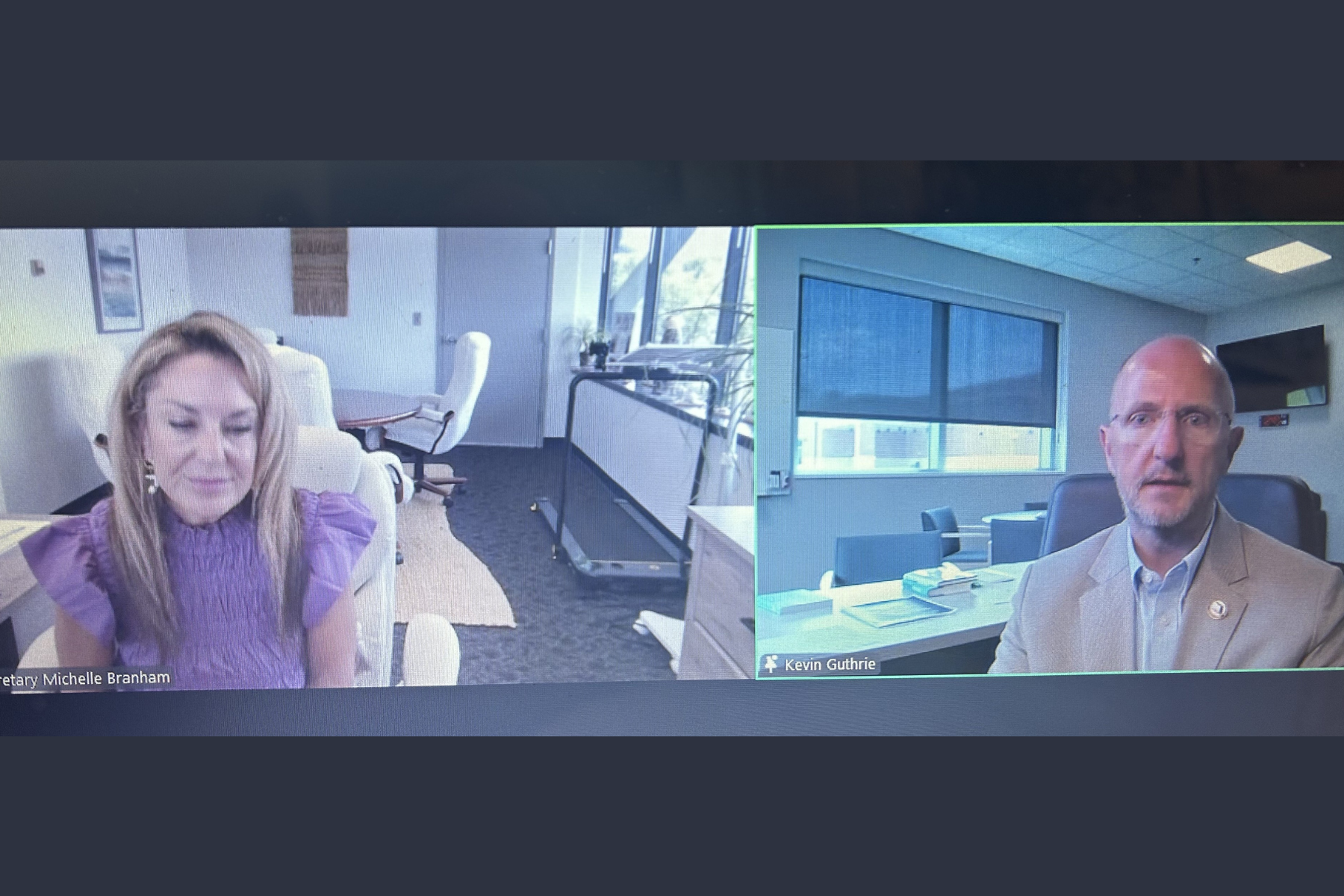
TALLAHASSEE, Fla. – When disaster strikes, emergency management is often measured by response times, recovery efforts, and resources delivered. But during this month’s Voices That Lead call, Florida Division of Emergency Management Executive Director Kevin Guthrie and Florida Department of Elder Affairs Secretary Michelle Branham reminded listeners that another essential resource is just as vital: faith.


The conversation offered a rare glimpse into the personal convictions that guide two of Florida’s top public servants, revealing how faith shapes leadership during some of the state’s most challenging moments.

Branham welcomed participants, sharing why opening meetings in prayer has become an important part of her leadership. She described Guthrie not only as a colleague, but as a trusted friend and mentor who has devoted countless nights, weekends, and holidays to protecting Floridians during hurricanes and other emergencies.

A Calling to Serve

Guthrie shared that his faith journey began in a Christian home where church was a central part of family life. Although he grew up believing in God, it was a conversation with his mother as a teenager that led him to make a personal commitment to Jesus Christ.

That faith, he said, continues to shape every decision he makes as director of Florida’s emergency management agency.

Recalling preparations before a devastating hurricane, Guthrie described standing before more than 600 emergency responders inside the State Emergency Operations Center.

“I told them, ‘Please know that I am a firm believer that you are in this place at this time, ordained by God, to respond to this incident,” Guthrie said.  “I don’t want anybody else on my team other than the people that are here.”

For Guthrie, leadership is rooted in the belief that every member of the emergency response team has been called to serve during critical moments.

More Than Hurricanes

While many Floridians associate the Division of Emergency Management with hurricanes, Guthrie explained the agency responds to a much broader range of emergencies.

From technological hazards such as hazardous material spills, cyber incidents, and space launch emergencies to natural disasters and man-made crises, Florida’s emergency management professionals remain activated almost continuously.

Since February 2020, Guthrie noted, the division has been inactive for only about seven weeks.

“I have team members that have spent 130 nights in a hotel room across the state, in a single given year,” he said. ” I have men and women that have not had a day off in four years.”

His prayer request for the faith community was simple but heartfelt.

“Pray for them on their mental health. Pray for their longevity. Pray for their sustainability.”

Faith Provides Hope After Disaster

One of the discussion’s most powerful moments centered on the role faith communities play after disasters.

Reflecting on the tragic Surfside condominium collapse, Guthrie said houses of worship and religious leaders became indispensable partners during the response.

“We would not be where we’re at today with Surfside had the faith-based community not stepped in and done what it did,” he said.

He recalled rabbis helping emergency responders respectfully navigate religious customs while families searched for answers amid unimaginable loss.

Beyond logistics, Guthrie said churches provide something government cannot.

“People need hope. They need faith. They’re looking for guidance,” he said. “They’re not looking to me to solve their faith problem. They’re looking to you.”

Branham agreed, recalling her own experiences following the September 11 attacks and during hurricane deployments.

“(It was) my faith. That was the only thing that got me through that and being able to be a steadfast person through that for others,” she said.

Churches as Partners in Preparedness

The conversation also focused on practical ways congregations can prepare before disasters occur.

Guthrie encouraged churches to promote Florida’s Special Needs Registry, ensuring seniors and residents with medical needs can receive transportation and assistance before and after emergencies.

He also introduced Operation Clear Path, a new initiative designed to connect faith-based organizations and nonprofit partners with vulnerable residents who need help clearing debris from private property following disasters.

Because government agencies cannot legally remove debris from private property using taxpayer dollars, volunteers can play a critical role in helping disabled veterans, seniors, and others recover more quickly.

Branham called the initiative an exciting opportunity for churches to become even stronger community partners.

Leading with Compassion

Throughout the hour-long discussion, Branham repeatedly emphasized that leadership is about caring for people first.

“I think of who’s in charge,” she said. “I think of Kevin, and I feel safe.”

She concluded the program by leading participants in prayer for Guthrie, Florida’s emergency management team, meteorologists, and first responders, asking God to grant them wisdom, endurance, protection, and peace as they continue serving communities across the state.

For both leaders, emergency management extends far beyond logistics and disaster response. It is a ministry of service grounded in compassion, resilience, and unwavering faith—one that reminds Floridians that even in life’s darkest moments, hope remains one of the most powerful tools available.

For more information about The Governor’s Faith and Community Initiative click here.