

















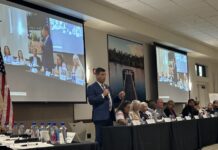


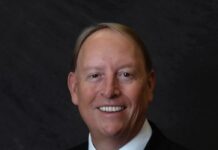


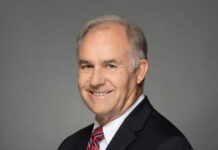











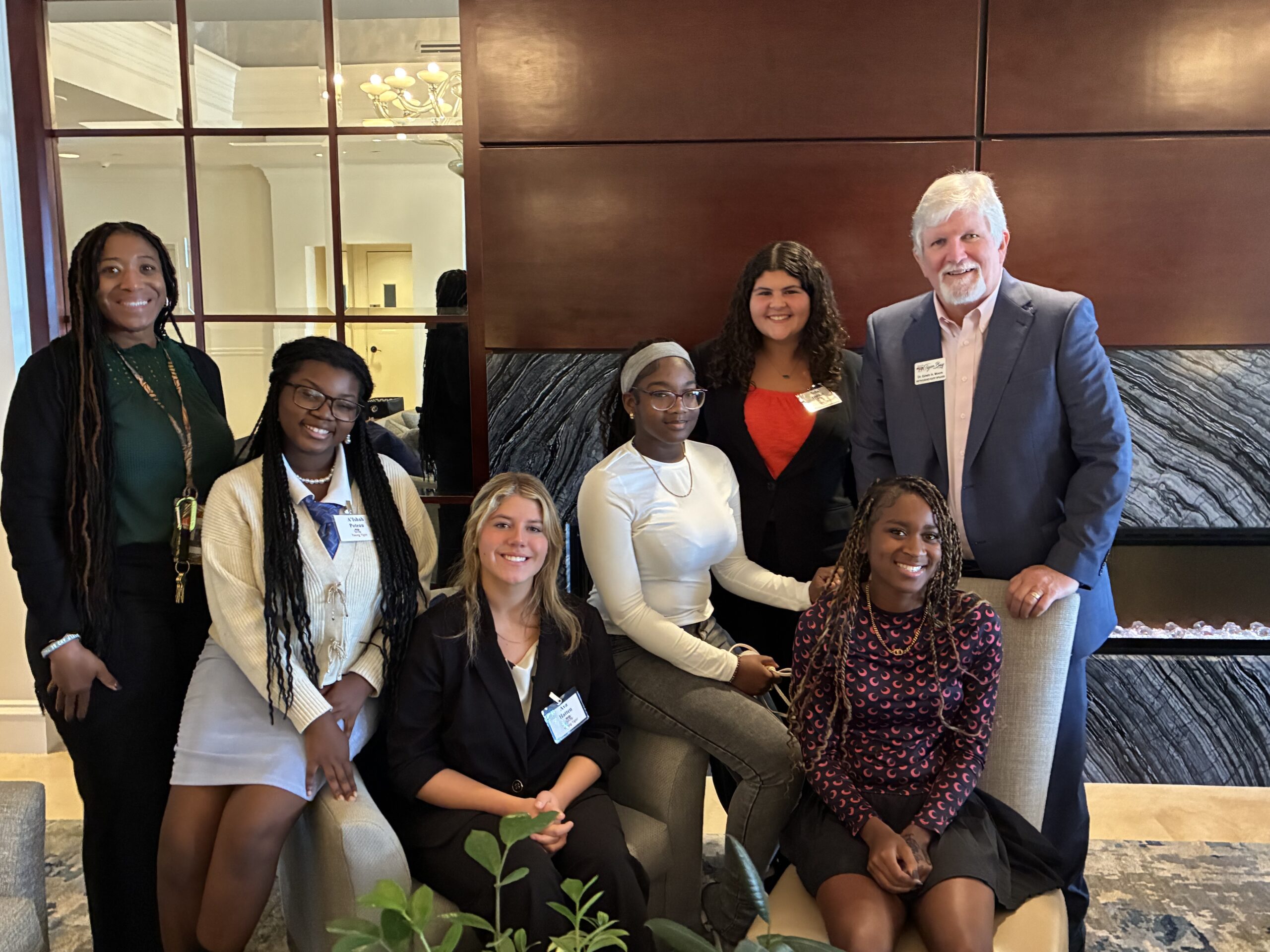
PALM COAST, Fla. – When Ed H. Moore, President Emeritus of the Independent Colleges and Universities of Florida, stepped to the podium at the Flagler Tiger Bay Club meeting on Tuesday, he didn’t offer a polished lecture—he delivered a warning.
“This time… we’re going to cover a lot of ground in a very short period,” Moore began. What followed was not just a presentation on higher education—it was a challenge to Floridians, policymakers, educators, and families to confront a system at a crossroads.
A System Shaped by Money—and Now Politics
“Who shaped higher education?” Moore asked. “Not the who, but the what. Money shapes it… it’s market driven.”
For decades, that market remained relatively stable, rooted in the post-World War II expansion fueled by the GI Bill. But today, the forces shaping education are shifting rapidly. Political influence has joined funding as a dominant driver, particularly under leaders like Ron DeSantis.
“We are seeing fairly large cultural adjustments and coursework modifications,” Moore said, noting that policy, politics, and power now intersect in ways that leave the future uncertain. “One never knows how long changes last.”
The Illusion of Reform
Moore didn’t mince words about the pace of change—or lack thereof.
“The inertia keeps the status quo,” he said, describing higher education as a “Jupiter-sized institution” resistant to disruption. Even when reforms are introduced, they are often incremental, diluted by competing interests and bureaucratic complexity.
“New ideas take funding,” he emphasized. “And it isn’t so easy to just move funds. Everybody hangs on to their share of the pie.”
The result? A system that appears to evolve but fails to truly transform.
A Crisis Hidden in Plain Sight
Beyond bureaucracy, Moore pointed to deeper, more urgent challenges—ones that directly impact quality of life in Florida.
-
A growing talent shortage in critical fields
-
Rising costs of education
-
Declining public confidence in college value
-
A pipeline problem beginning in K-12 education
“We are still woefully short of producing the number of competencies required to serve our essential needs,” he warned.
Perhaps most alarming: the potential collapse of institutions themselves.
“A new estimate projects 442 of the nation’s 1,700 private colleges and universities will close within the next 10 years.”
That’s not just an education issue—it’s an economic and community crisis.
The Knowledge Revolution—and Institutional Lag
Moore highlighted a fundamental disruption: knowledge is no longer controlled by institutions.
Citing Elon Musk, he noted, “You don’t need college to learn stuff. Everything is available basically for free.”
The internet has democratized learning, but institutions have been slow to adapt. Costs continue to rise even as access to information becomes universal.
“We remain bound to old models while changes demand new approaches.”
Florida’s Workforce Reality
The consequences of inaction are already visible.
Moore pointed to a looming healthcare crisis: “Within eight years, we will be short 60,000 nurses in Florida.”
That shortage isn’t abstract—it affects hospital wait times, access to care, and overall quality of life for residents.
“You can’t recruit what isn’t there,” he said bluntly.
Yet funding structures remain disconnected from workforce needs. Students pursuing critical fields often receive no more support than those entering less urgent areas.
“If we need more healthcare professionals, why don’t we use our resources to address that need?”
K-12 Failures, Lifelong Consequences
Moore traced the problem back even further—to early education.
“When students fail, they are destined for lives filled with struggle, and they will be a burden upon society forever.”
Despite this, national conversations often focus on bureaucracy rather than outcomes. He criticized proposals like dismantling the U.S. Department of Education as distractions.
“Does anyone really believe that restructuring a federal bureaucracy will improve performance in Florida schools?”
Instead, Moore called for a “moonshot” approach—bold, outcome-driven reform focused on performance, not politics.
The Global Wake-Up Call
The stakes extend beyond Florida.
Referencing the 1983 report A Nation at Risk, Moore noted that the U.S. once ranked sixth globally in education. Today, it has fallen dramatically.
“The status quo is losing. And we are losing.”
In a rapidly evolving global economy, that decline threatens competitiveness, innovation, and long-term prosperity.
Solutions: Choice, Accountability, and Urgency
Moore didn’t just diagnose the problem—he outlined a path forward:
-
Follow the student with funding: Expand voucher-style systems into higher education, giving students true choice
-
Align funding with workforce needs: Prioritize critical fields like healthcare and technology
-
Demand accountability for outcomes: Focus on performance, not process
-
Strengthen K-20 alignment: Treat education as a continuous pipeline, not disconnected systems
-
Reduce political interference: “Bullying politics cannot continue if we are ever going to address critical issues”
He also emphasized the importance of Florida’s college system as an accessible entry point: “It’s a way up, a way out, and a wonderful opportunity.”
A Final Challenge
Moore closed with a warning that doubled as a call to action:
“The longer you stay on the wrong train, the more expensive it is to get home.”
Florida—and the nation—must decide whether to continue tweaking a failing system or commit to meaningful transformation.
“We need a moonshot attitude,” he said, acknowledging the effort will be difficult. If They say it can’t be done…Do it anyway.”
The message is clear. Education reform is no longer optional. It is essential to the future workforce, the economy, and the quality of life for every Floridian.
The question now is whether leaders—and communities—are willing to act before the cost of inaction becomes too great.