




























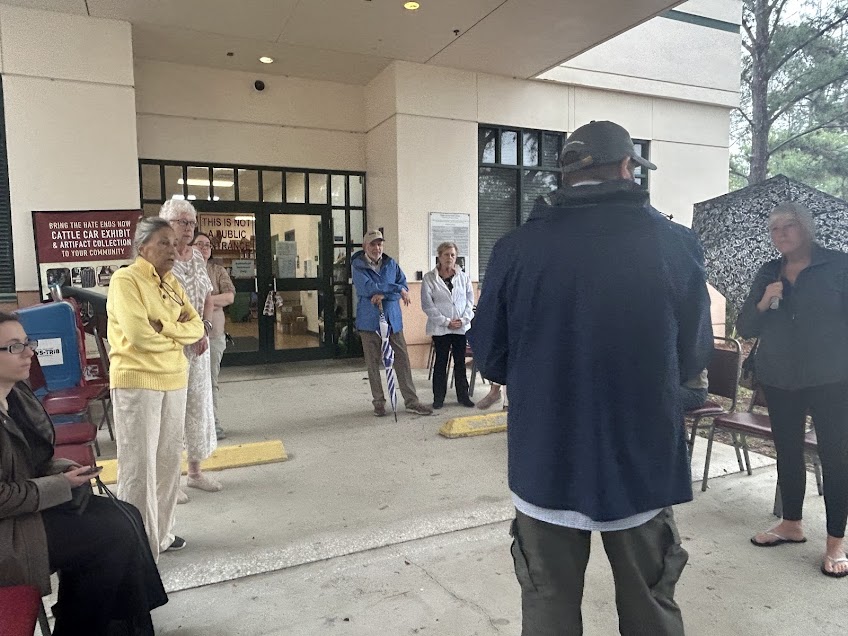
FLAGLER COUNTY, Fla. – A powerful and sobering piece of history arrived in Flagler County Public Library on Tuesday, where a one-day-only traveling exhibit brought the realities of the Holocaust directly into the heart of the community.
The “Hate Ends Now” cattle car exhibit offered visitors an immersive and deeply moving look at one of history’s darkest chapters—The Holocaust, during which six million Jewish people were systematically murdered by Nazi Germany during World War II.
Leading the effort locally is Gemma Rose, assistant branch manager of the Palm Coast Library branch, whose wide-ranging responsibilities include overseeing circulation, reference services, outreach, and adult programming.
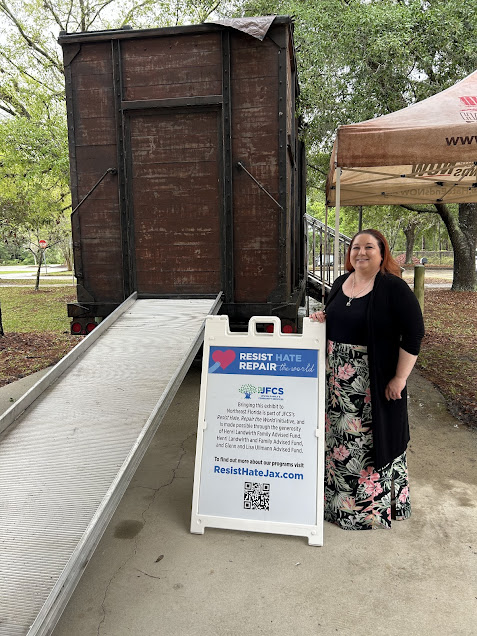
The exhibit is part of an ongoing partnership with Jewish Family & Community Services, which has worked with the library system for several years to bring educational Holocaust programming and exhibits to Flagler County.
“We are partnered with the Jewish Family and Community Services,” Rose said. “What’s been wonderful is that they’ve gifted us traveling exhibits that highlight different aspects of the Holocaust, from local survivors to women of the Holocaust.”
Past collaborations have extended beyond Holocaust education. Rose noted a recent exhibit highlighting Martin Luther King Jr. and his time in St. Augustine, connecting local history to the broader civil rights movement through art and storytelling.
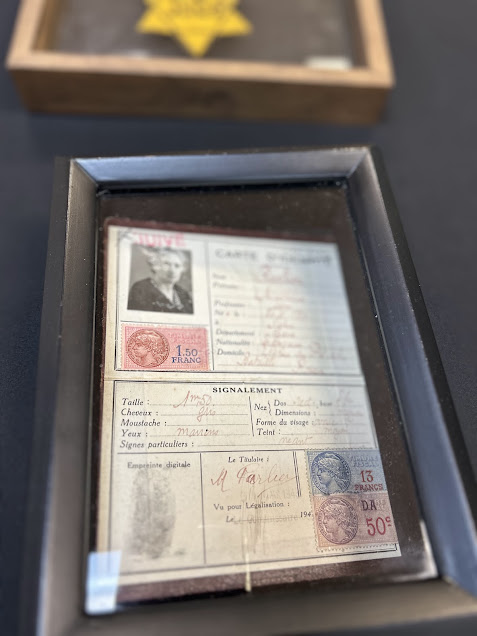
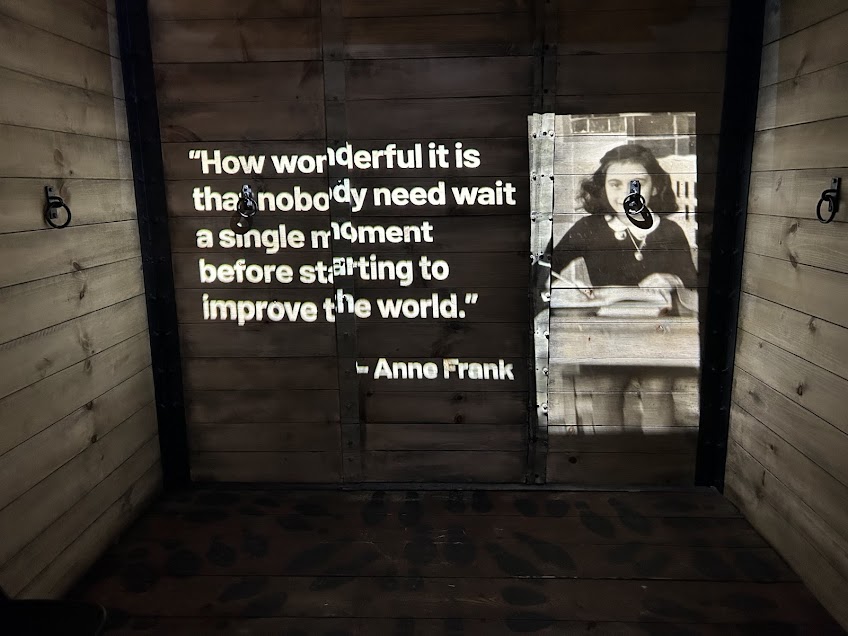
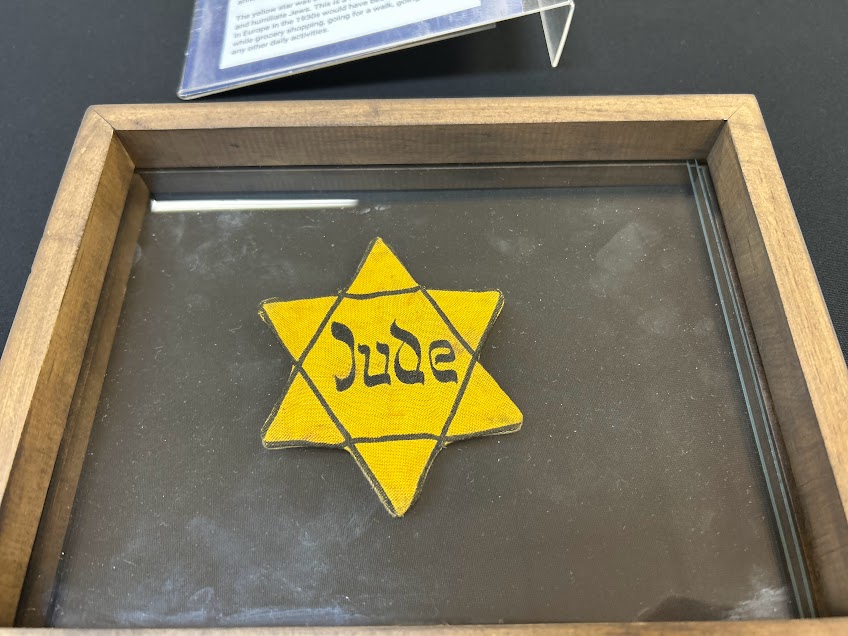
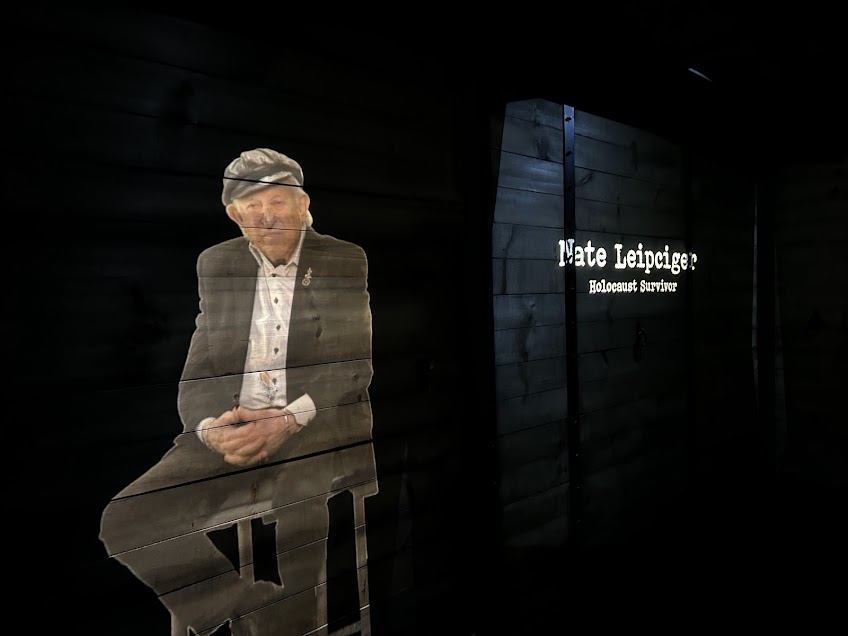
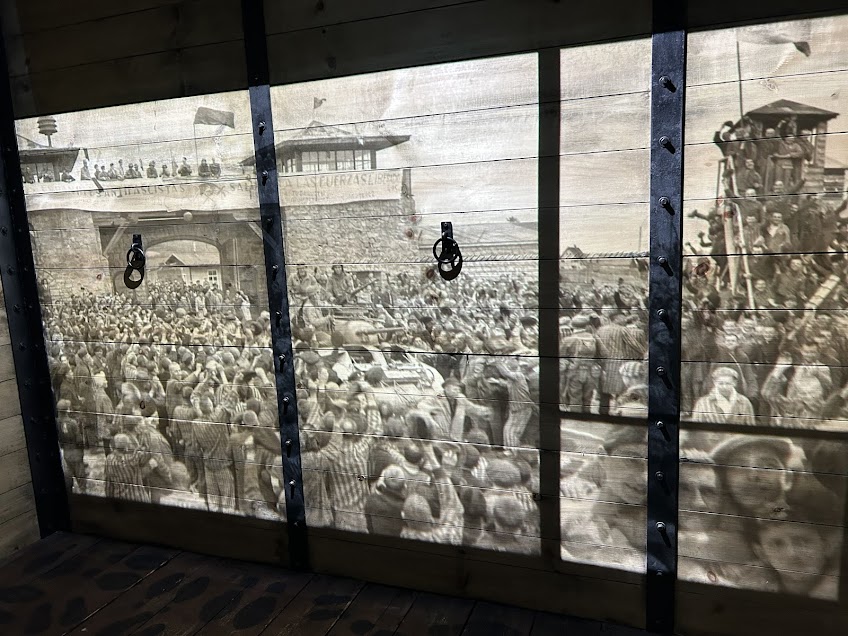
At the center of the current traveling exhibit is a replica cattle car—symbolic of the transport vehicles used to deport Jewish people and other victims to concentration camps. Inside and alongside the installation, visitors encountered personal stories as told by liberated survivors Hedy Bohm and Nate Leipciger, historical documentation, and authentic artifacts that bring the past into stark focus.
“For us, it’s about education,” Rose said. “It’s also about providing information that is completely unbiased, because that’s what a library is here for—to provide information to the community and be a spot that is a reliable resource.”
The exhibit goes beyond a single narrative. Instead, it presents multiple perspectives and tangible evidence of history.
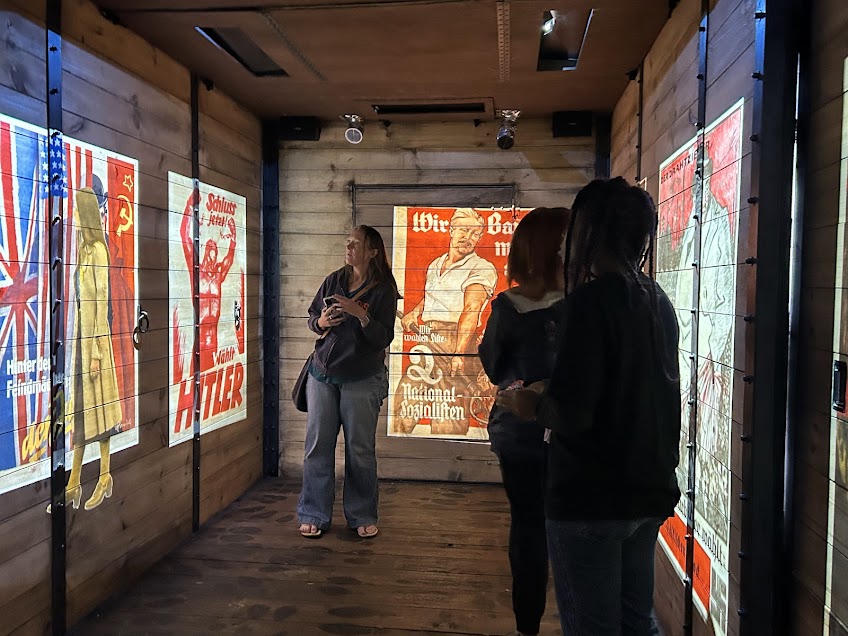
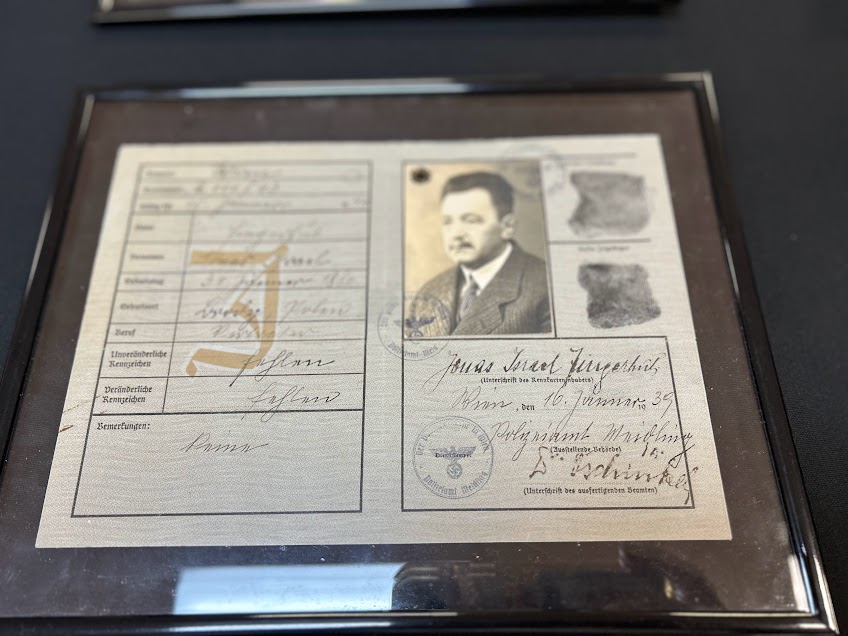
“They’re telling not only just one story, but a few stories of survivors,” she said. “On top of that, they provided us with a collection that travels with it, of artifacts from the Holocaust—propaganda, a child’s tunic from the Hitler Youth, and even altered passports used to protect people. So, it’s the whole story.”
That comprehensive approach is especially important as fewer firsthand witnesses remain. Despite the passage of nearly a century, Rose emphasized the urgency of keeping these stories alive—particularly for younger generations who may not encounter this history elsewhere.
“We seem so far removed… but it is important,” she said.
The exhibit also resonates locally. According to Rose, Flagler County is home to a significant population of Holocaust survivors, some of whom are directly involved with the library.
“What’s really awesome is we actually have a few that volunteer for our library,” she said. “Anytime we host programs like this, they just say, ‘keep doing it, keep doing it.’ And that’s what we’re here to do.”
Educational outreach remains a key component, with programs that invite students to engage directly with descendants of survivors—offering opportunities to ask questions and connect with history in a personal way.
At a time when misinformation and bias persist, Rose said the library’s role is not to dictate conclusions, but to provide facts and foster critical thinking.
“For us, it’s about presenting facts,” she said. “And then we leave it up to the person to critically think, and to make their own assessments and their own judgments.”
Ultimately, the exhibit underscores a simple but profound message—one that transcends labels and divisions.
“You can’t deny the stories that are being told here. You can’t deny the physical evidence,” Rose said. “It helps get rid of that stigmatism… because it’s a person. It’s not, ‘they’re Jewish, they’re this, they’re that.’ No—this is a person. And that’s what we need to focus on.”
Through initiatives like the “Hate Ends Now” exhibit, the Flagler County Public Library continues to serve not only as a center for information, but as a guardian of memory—ensuring that the lessons of the Holocaust are preserved, understood, and never forgotten.