


































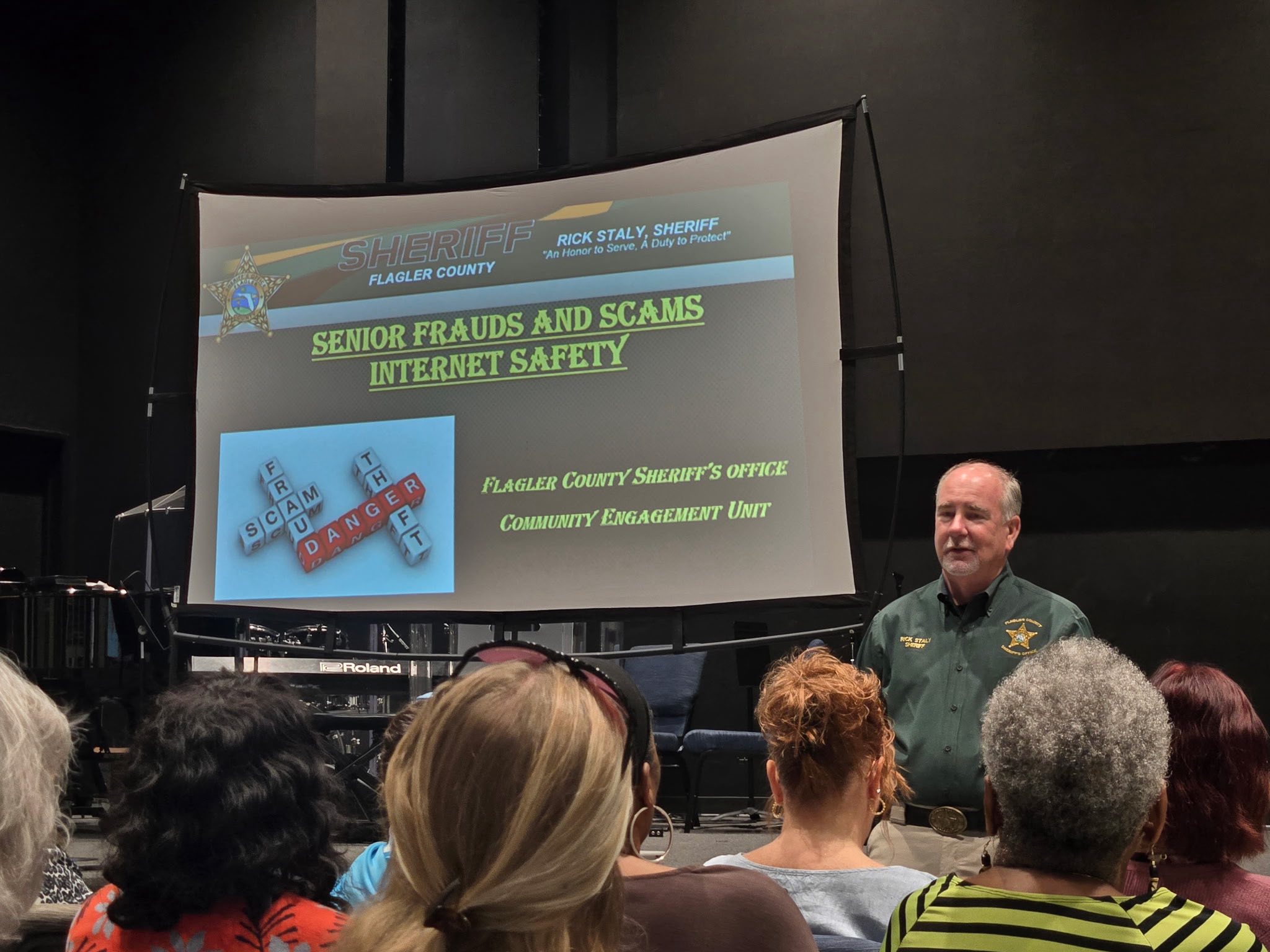
PALM COAST, Fla. – Community members gathered at Palm Coast United Methodist Church on Wednesday morning for an important and timely conversation: how to stay one step ahead of online scammers. Hosted by Nina Guiglotto of Lotus Funeral Home, the free “Lunch & Learn”–style event featured practical, real-world advice from Commander Mike Lutz of the Flagler County Sheriff’s Office.
The seminar, part of an ongoing monthly series focused on protecting families and planning for the future, drew a strong turnout—especially among those working closely with seniors.
A Community-Focused Effort
“This is a life series that covers our legacy, investment, family, and estate—anything that can protect families,” said Guiglotto. “Today, we have the sheriff’s office talking about how to avoid scams for seniors and anyone of all ages.”
The event marked the second in the series, with more already planned.
“Next month, we have attorney Mark Dwyer, and he’ll be talking about estate planning,” she added. “These will be free, brunch-and-learn type events on the first Wednesday every month, 9:30 to 11:30, and we’ll have vendors as well.”
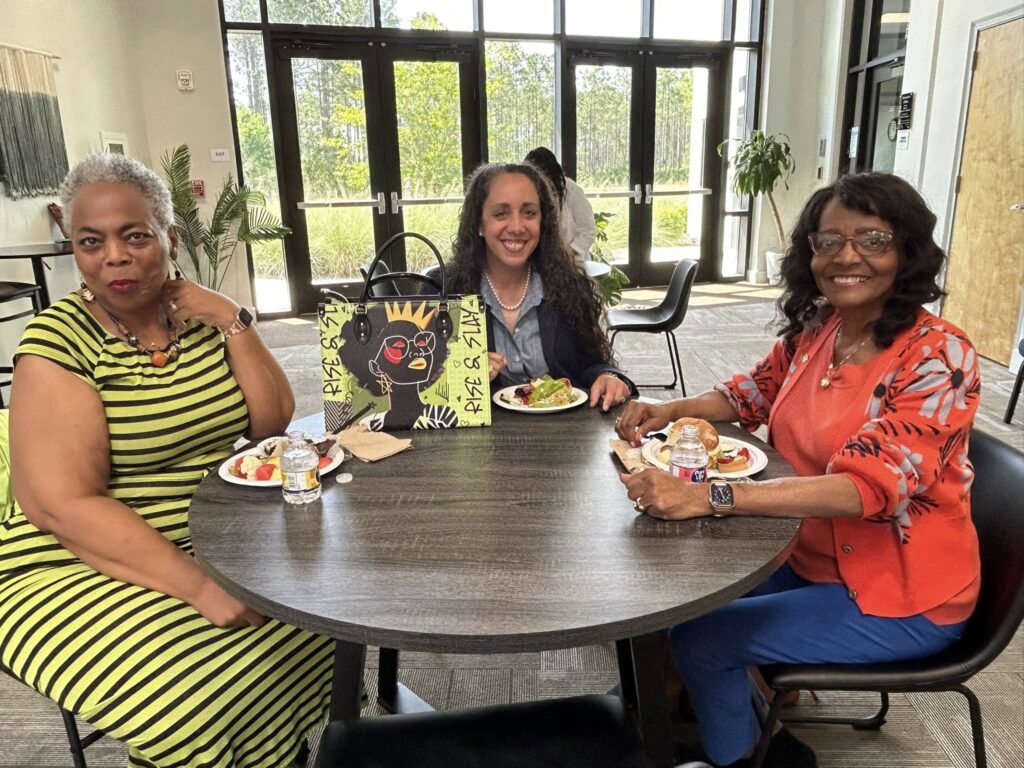
Guiglotto noted that scam prevention is always a topic that resonates.
“Anytime people want to find out how to avoid scams, it’s usually a big topic. I’m happy this was a good turnout today—and that many of these people work within senior living, so they can share what they’ve learned.”
“Double Check, Triple Check”
Commander Lutz delivered a clear and urgent message: vigilance is key.
“Double check. Double check, triple check,” he emphasized repeatedly, encouraging attendees to slow down and verify before acting on any suspicious communication.
One simple but powerful tool? Family code words.
“Code words work—in all aspects,” Lutz said, explaining how families can establish a shared word or phrase to verify identity during emergencies or unexpected calls. “If you don’t know that code word… that’s perfect. That’s what you gotta do.”
Watch the Small Charges
Lutz warned that scammers often play the long game, slipping small, recurring charges onto accounts that can go unnoticed for months.
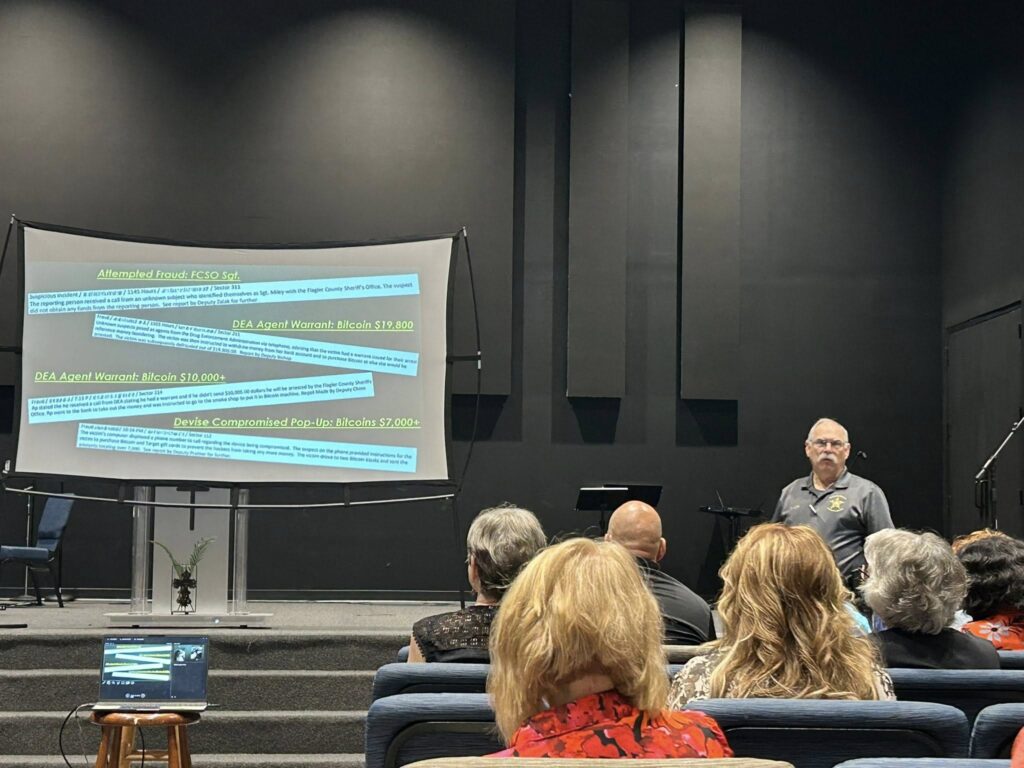
“How many of you would not notice a charge… $10.14, $11.19, $18.04?” he asked. “You look at the big ones—but somewhere, you got signed up and didn’t know it.”
Those small charges add up—not just for one victim, but across thousands.
“If they do that to 100,000 people… how much money do they make?”
His advice, review bank and credit card statements carefully and regularly, no matter how small the charge may seem.
Shred, Cut, Protect
Another major takeaway: properly dispose of personal information.
“Once you throw it out, it’s at the curb—it’s fair game,” Lutz said.
He urged attendees to shred documents, cut up old credit cards, and even destroy the embedded chips.
“Cut that card up—cut that strip, cut that chip,” he said. “If you don’t, they can take that information.”
For those going the extra mile, others suggested disposing of pieces separately over time.
Scammers Exploit Emotion
Perhaps the most sobering part of Lutz’s talk focused on how scammers manipulate emotions—especially during vulnerable moments.
“They get you at the lowest moment, when you’re very sad,” he said, describing scams involving fake funeral emergencies or urgent financial demands.