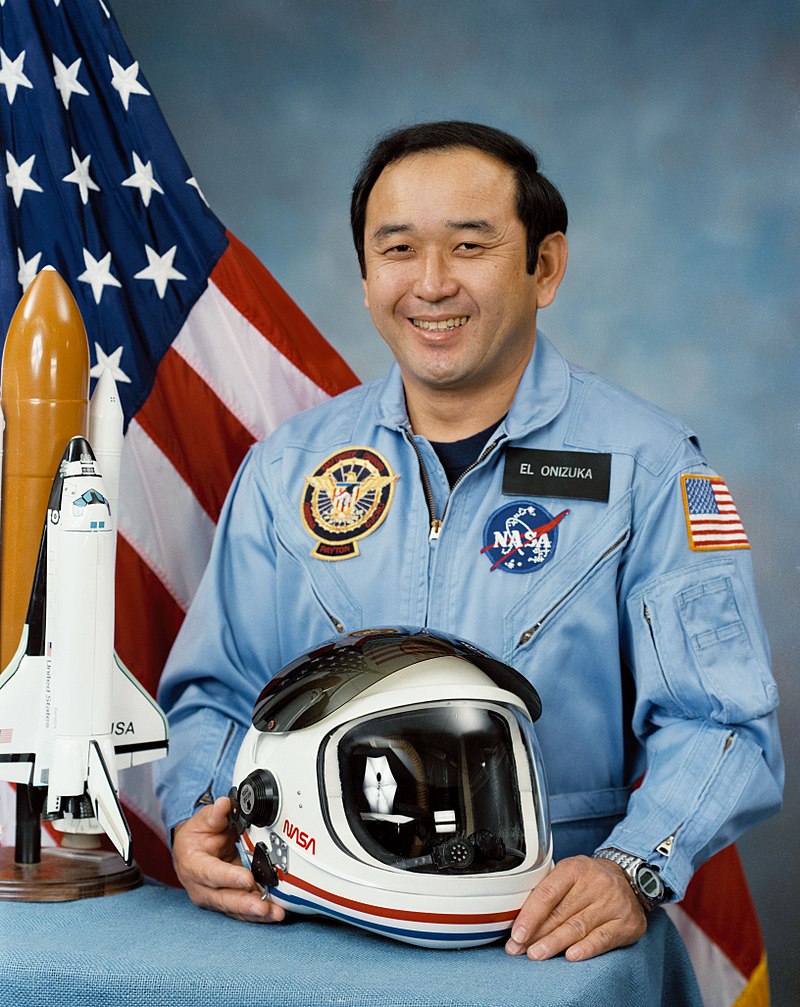
Summary: Global Positioning System (GPS) III Space Vehicle (SV)09, named in honor of U.S. Air Force test pilot and NASA space shuttle Challenger astronaut Col. Ellison Onizuka, will be the next advanced Positioning, Navigation, and Timing (PNT) satellite launched into orbit from Space Launch Complex (SLC)-40 at Cape Canaveral Space Force Station, Florida aboard a SpaceX Falcon 9 rocket no earlier than Jan. 25, 2026.
EL SEGUNDO, Calif. & COLORADO SPRINGS, Colo. — U.S. Space Force’s Space Systems Command (SSC) and Combat Forces Command (CFC) will launch the next National Security Space Launch (NSSL) GPS III mission with Space Vehicle (SV)09 aboard a SpaceX Falcon 9 rocket from Space Launch Complex (SLC)-40 at Cape Canaveral Space Force Station, Fla. This next GPS III launch is planned for Jan. 25, 2026.
The 15-minute window opens at 11:46 p.m. ET with a backup opportunity available at 11:42 p.m. PT on Monday, January 26.
A live webcast of this mission from launch to satellite deployment will begin about ten minutes prior to liftoff, which you can watch on www.spacex.com/launches. You can also watch the webcast on the X TV app, as well as various streaming outlets (YouTube.com, NASASpaceflight.com, SpaceflightNow.com, etc.).
The two field commands are executing this mission using the model established by the Rapid Response Trailblazer launch in December 2024 and GPS III-7 (SV08) launch in May 2025. Being pre-postured with the right equipment has enabled the launch teams to process and integrate the GPS III (SV09) satellite with the Falcon 9 rocket on a shortened timeline.
GPS III satellites, equipped with M-Code technology, provide the warfighter with a significantly more accurate and jam-resistant capability. Adding another such satellite to the constellation enhances the system’s robustness and ultimately boosts the warfighting lethality of the Joint Force.
“For this launch, we traded a GPS III mission from a Vulcan to a Falcon 9, then exchanged a later GPS IIIF mission from a Falcon Heavy to a Vulcan,” said USSF Col. Ryan Hiserote, SYD 80 Commander and NSSL program manager. “Our commitment to keeping things flexible – programmatically and contractually – means that we can pivot when necessary to changing circumstances. We have a proven ability to adapt the launch manifest to complex and dynamic factors and are continuing to shorten our timelines for delivering critical capabilities to warfighters.”
The space vehicle was successfully delivered to Florida over-the-road on July 31, 2025. Now, CFC’s Mission Delta 31 is leading the pre-launch processing of the space vehicle, working alongside Lockheed Martin to integrate it onto the rocket and for launch in a faster timeline than in the past.
“This mission represents an outstanding collaboration across multiple teams and agencies,” said U.S. Space Force Col. Stephen Hobbs, MD 31 commander. “It foot stomps our ability to rapidly deploy a high-value space asset, in this case, an additional M-Code-capable satellite that brings significant, immediate value to the Joint Force.”
SV09 is named in honor of Col. Ellison Onizuka, a U.S. Air Force test pilot and NASA astronaut. Onizuka successfully flew on STS-51C, a space shuttle Discovery mission in January 1985. The naming of the satellite also honors his memory as one of the astronauts who perished during the launch of STS-51L aboard the space shuttle Challenger on Jan. 28, 1986. With the launch of SV09, the GPS III constellation gains another satellite equipped with significantly enhanced accuracy and jam-resistance, bolstering the capabilities of the Joint Force.
About SSC
Space Systems Command is the U.S. Space Force field command responsible for acquiring, developing, and delivering resilient capabilities to outpace emerging threats and protect our Nation’s strategic advantage in, from, and to space. SSC manages a $15.6 billion annual space acquisition budget for the Department of Defense, working with joint forces, industry partners, government agencies, academia, and allied nations. For more information, visit ssc.spaceforce.mil and follow @USSF-SSC on LinkedIn.
About SYD80
SYD 80 executes the U.S. Space Force’s core function of Space Access, performing space lift and range control missions in close partnership with the 30th and 45th Space Launch Deltas. Additionally, the delta develops resilient and ready launch and test infrastructure to expand U.S. economic, technological, and scientific leadership. Furthermore, SYD 80 delivers servicing, mobility, and logistics capabilities that operate in, from, and to the space domain.
About CFC
CFC is the service force provider, focused on generating and presenting improved combat-ready Space Forces, fortifying mission resiliency and advocating for combat-ready space power from future force to fielded force.
About Mission Delta 31
MD 31’s mission is to provide, operate, and sustain Satellite Control & Navigation Warfare to protect our Nation’s interests. And assure an unparalleled global unity. MD 31 is the world’s premiere provider of positioning, navigation, timing, and satellite control…for all users, in all places, at all times.
View the SSC Fact Sheet
View the AATS Fact Sheet
View the CFC Fact Sheet